Anne Sundberg’s timely documentary examines what constant smartphone use is doing to childhood, attention and… Read More →



Anne Sundberg’s timely documentary examines what constant smartphone use is doing to childhood, attention and… Read More →
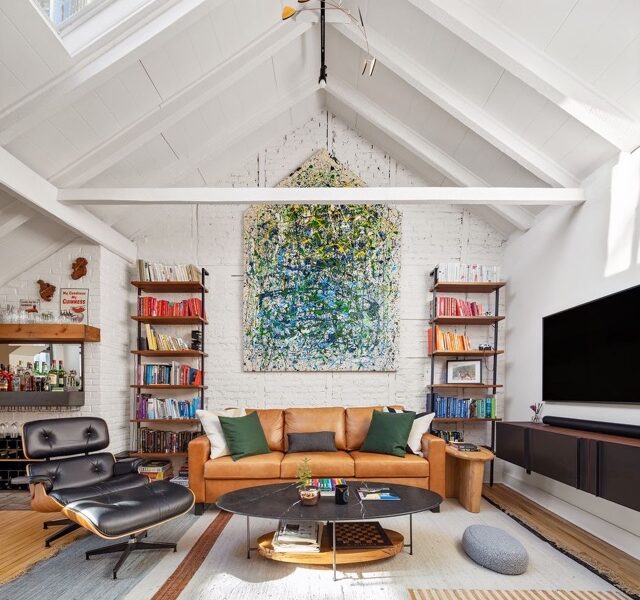
Before Jackson Pollock found his artistic home in Springs, the 20-year-old painter lived and worked… Read More →

Philanthropist Jean Shaiforff welcomed guests for cocktails, live music and a touch of French flair… Read More →

Everyone heads to the Hamptons International Film Festival for movies. Makes sense. But come the… Read More →

Dana Nachman’s award-winning documentary short comes to the Hamptons International Film Festival with the story… Read More →

The Hamptons International Film Festival opens, Sag Harbor’s music fest gets its rain-delayed encore, and… Read More →

The nonprofit is launching a bilingual civic engagement initiative to help residents across the East… Read More →

After last weekend’s storm forced a postponement, the Sag Harbor American Music Festival is back… Read More →

From I Play Rocky and Amanda Seyfried to Chris Rock’s Misty Green, Spotlight films, documentaries,… Read More →
The former New York governor has purchased historic Seatuck Lodge, a sprawling Hamptons compound with… Read More →
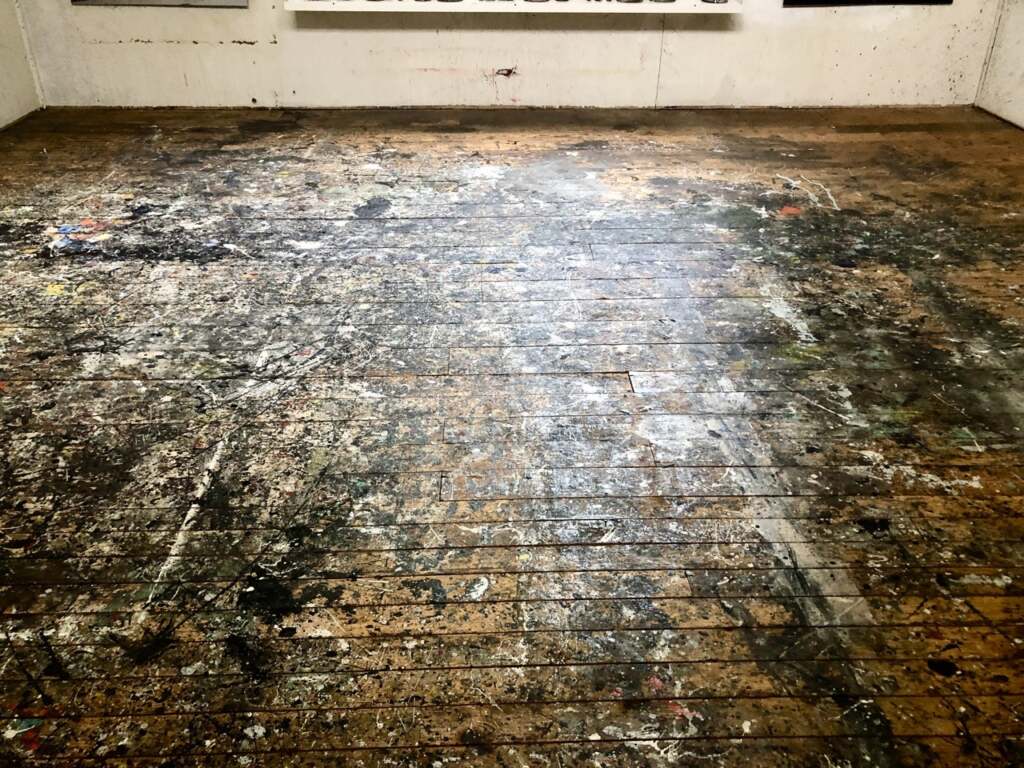
Long before Jackson Pollock was dripping paint across canvases on the floor of his barn studio in Springs, he was a 20-year-old art student trying to make it in New York City.
Now Pollock’s former West Village apartment at 46 Carmine St. has hit the market for $1.99 million, more than 90 years after the artist lived and worked there.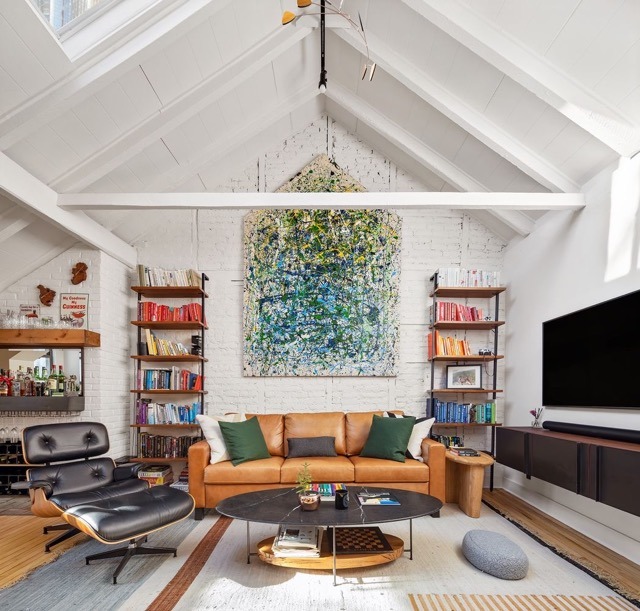
The roughly 690-square-foot, one-bedroom apartment sits on the top floor of an 1827 Federal-style townhouse between Bedford and Bleecker streets.
For East Enders accustomed to thinking of Pollock as inextricably linked to Springs, the Carmine Street apartment offers a glimpse of a very different setting — when Pollock was young, broke and years away from becoming one of the most important American artists of the 20th century.
Pollock moved into 46 Carmine St. in 1932, sharing the apartment with his older brother, artist Charles Pollock, and Charles’ wife, Elizabeth. The brothers were studying with painter Thomas Hart Benton at the Art Students League, and the small apartment did double duty as their studio. Charles worked in the front room; Jackson worked in the back.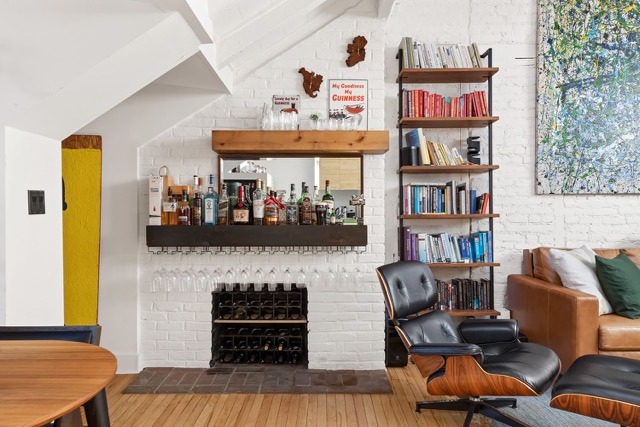
The Great Depression was underway, Pollock had yet to earn money from his art and he relied on odd jobs and help from his family. The listing describes this period as Pollock “young, experimenting, and still finding his way.”
The Carmine Street apartment was a temporary stay — less than a year — until Pollock found his way to 46 East 8th Street in Greenwich Village where he continued to live with his brother Charles and sister-in-law Elizabeth.
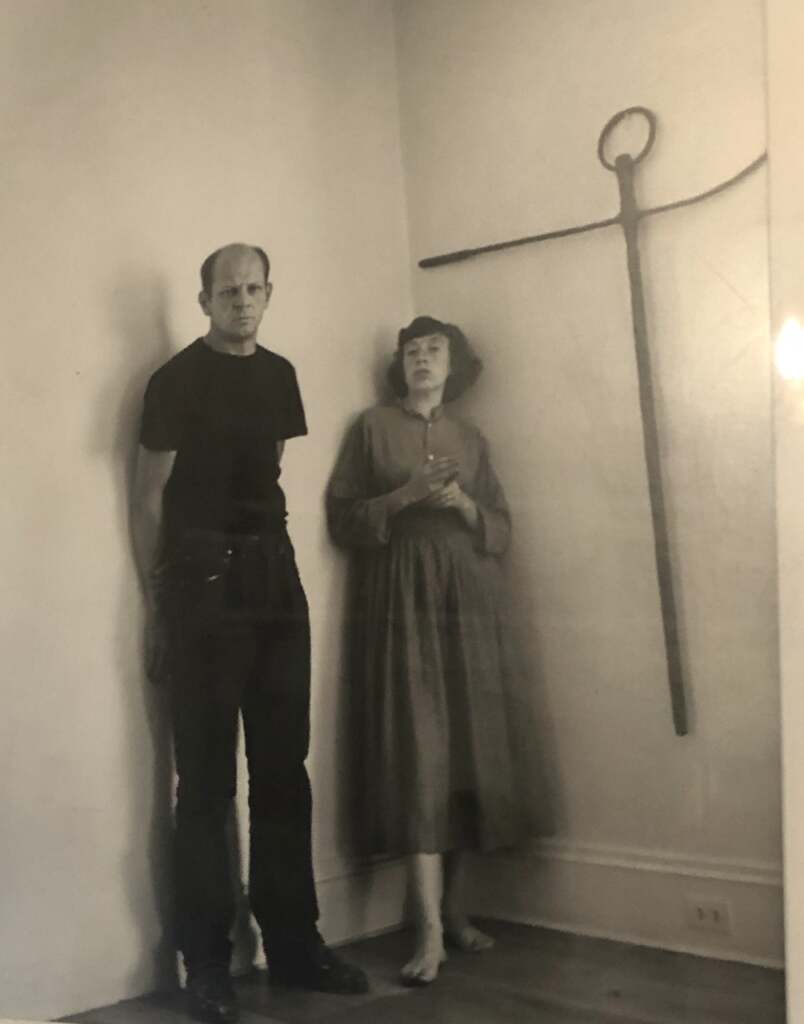
(After Charles moved out and Pollock’s other brother Sanford moved in with his wife, Pollock continued to live and work there with them — and eventually with Lee Krasner — until 1945, when they married and left the city for Long Island.)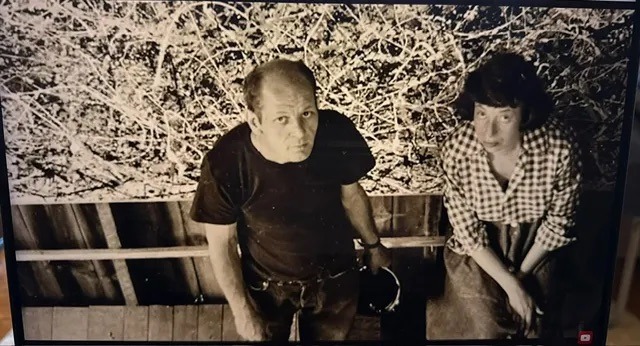
The timing of the downtown sale comes as Pollock and Lee Krasner are back in the spotlight uptown.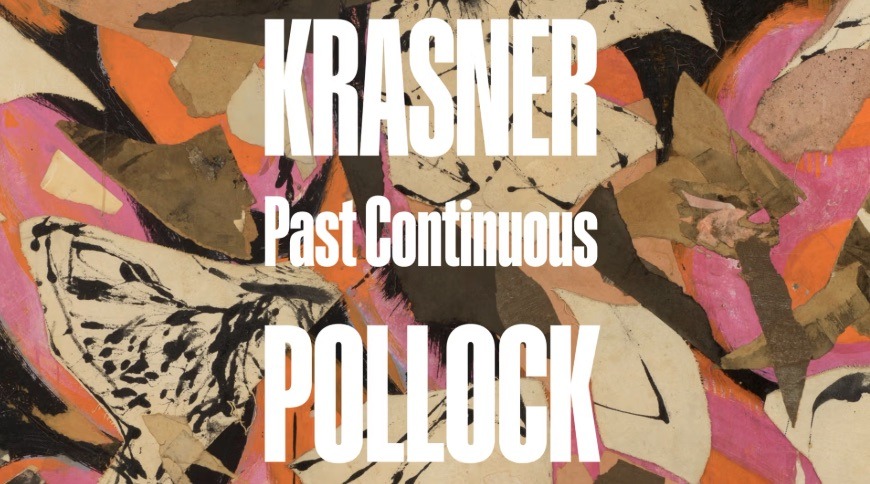
Krasner and Pollock: Past Continuous opens Oct. 4 at The Metropolitan Museum of Art and runs through Jan. 31, 2027. The exhibition brings together more than 120 works and examines the two artists across their careers, from their early years in New York through the period when Springs became home — and an important part of their artistic lives.
The Carmine Street loft captures Pollock near the beginning of that story — years before Springs, before the barn studio and before the poured paintings that would make him, and Krasner, famous.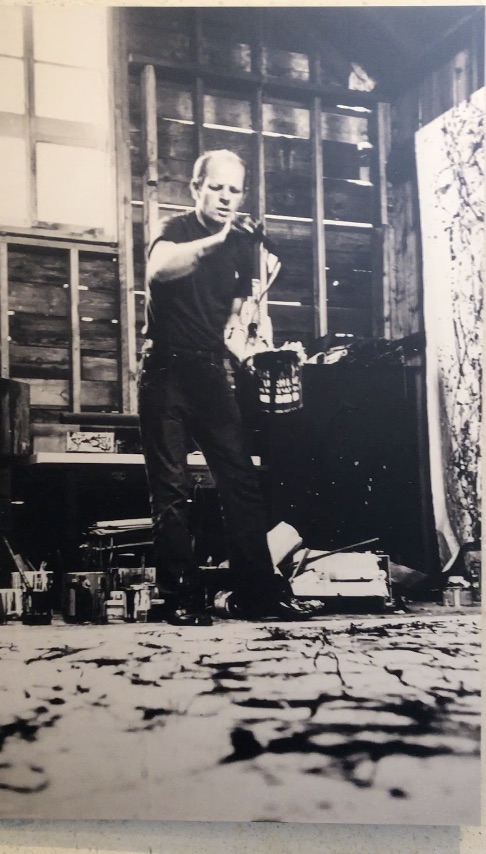
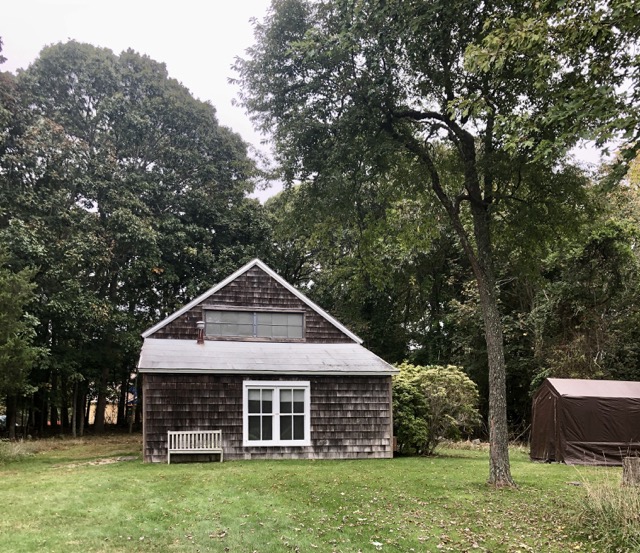
In 1946, a year after arriving in Springs, Pollock and Krasner bought what is known today as the Pollock-Krasner House and Study Center in Springs — with the help from Pollock’s dealer and patron Peggy Guggenheim.
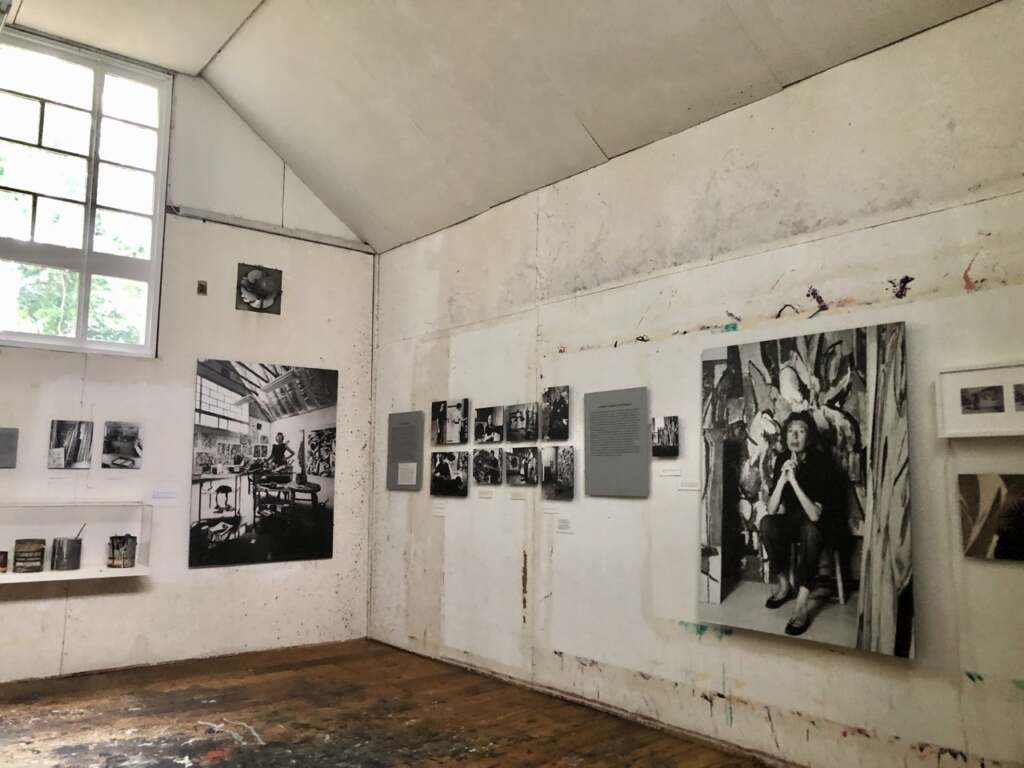
Pollock eventually converted the barn into his studio, while Krasner worked in an upstairs bedroom before moving her studio to the barn after Pollock’s death.
Needless to say, Pollock would barely recognize his old Carmine Street digs today.
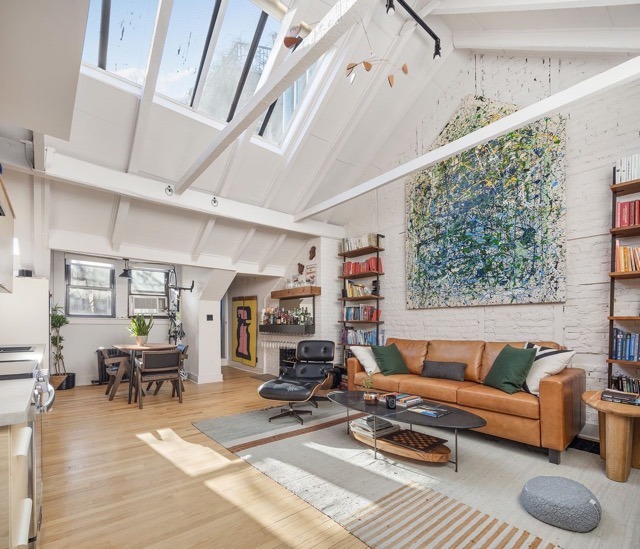
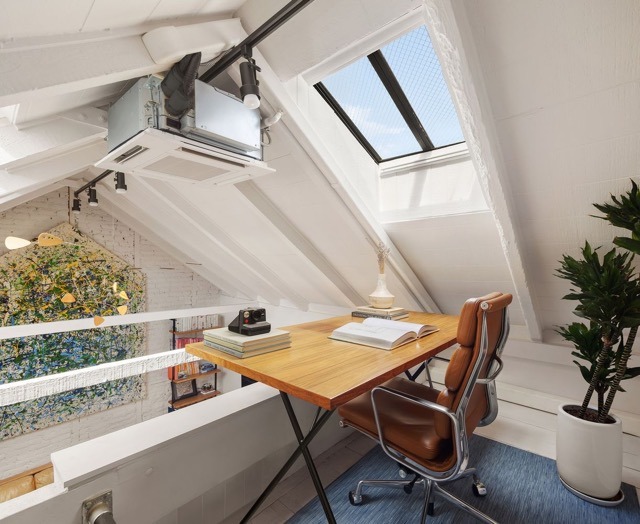
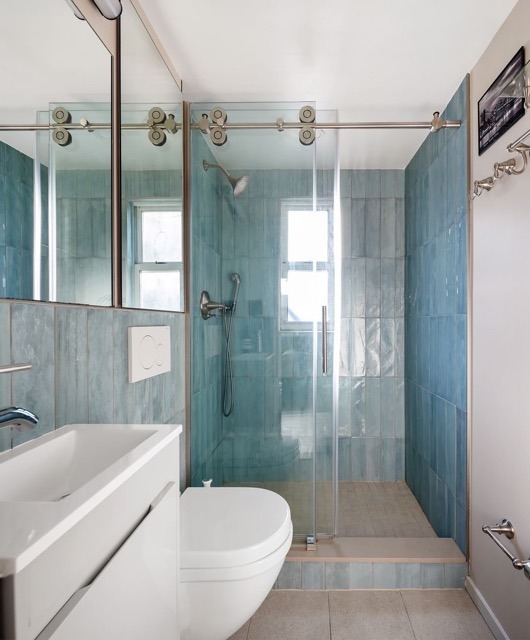
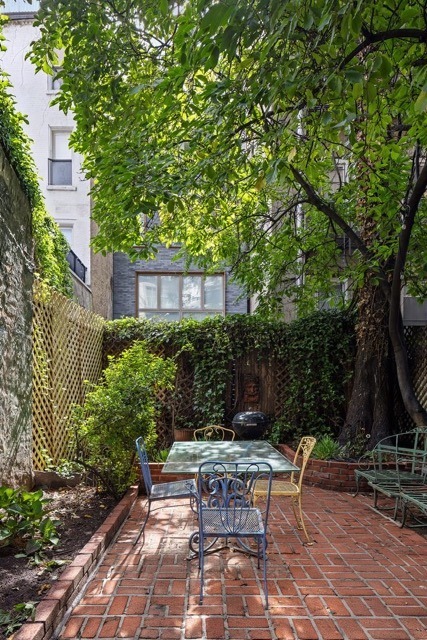
The renovated one-bedroom has 14-foot ceilings, four skylights, exposed beams and brick, hardwood floors, an updated open kitchen and renovated bathroom. There’s also a walk-in closet and an overhead loft that can serve as — what else? — an artist’s studio. A decorative fireplace adds another bit of character, while a shared garden sits behind the building.
The townhouse itself has a colorful history. Built in 1827, it once housed a milliner selling hats and bonnets in the 1850s and was later incorporated into the Greenwich Village Historic District.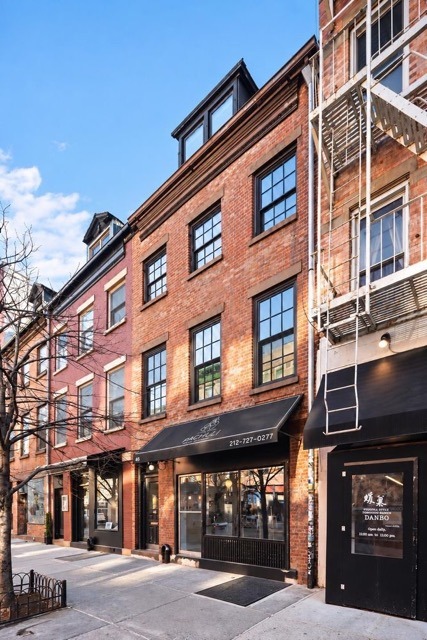
The Pollock connection hasn’t been lost on the current owner.
Irish entrepreneur Fergus Hurley began renting the apartment after moving to New York in early 2020 and purchased it in an off-market deal the following year. During the pandemic, with Pollock very much on his mind, Hurley decided the apartment needed some art of its own.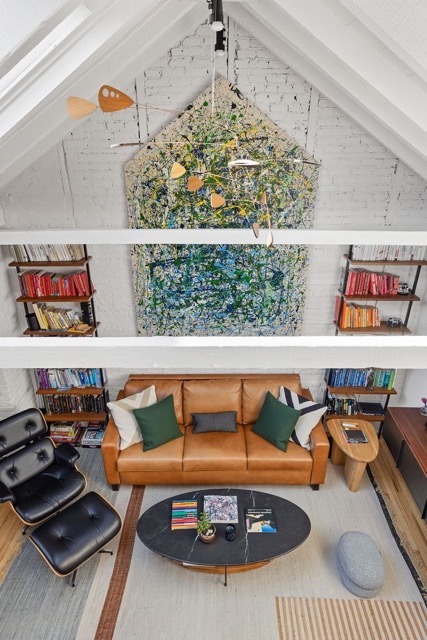
He created a Pollock-inspired painting more than 10 feet tall, even custom-building a frame to follow the unusual angles of the apartment’s roofline. The oversized work remains on the living room wall and, according to published reports, could potentially be negotiated as part of a sale. (As ambitious as the effort, one can’t help but calculate the price of the apartment if the painting happened to be an original Pollock as part of the sale).
“There is something about the apartment that makes you want to create,” Hurley told ARTnews.
Perhaps that is known as “The Pollock Effect.”
Drip. Drip. Drip.
The apartment is listed with Shane Boyle of Compass.