Bay Street co-founder Stephen Hamilton returns to direct a powerhouse ensemble in a production that… Read More →
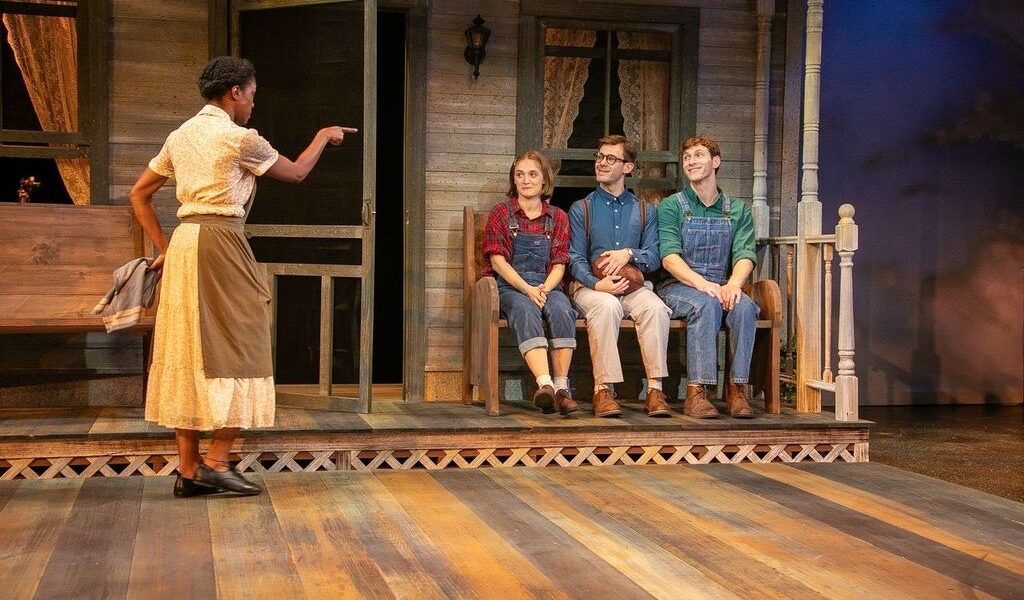


Bay Street co-founder Stephen Hamilton returns to direct a powerhouse ensemble in a production that… Read More →

Steps from Radio City Music Hall and the famous Christmas tree, this historic Midtown townhouse… Read More →

The Rockettes return to Radio City Music Hall with a record 230 performances, a high-energy… Read More →

The historic East Hampton Village retreat, owned by Antonella Bertello, earns another international honor for… Read More →

The Hamptons’ summer playground of sprawling estates, poolside parties and Manhattan money provides the backdrop… Read More →

The Academy Award- and Tony-winning actress talks to Spark Hamptons about finding her way back… Read More →

From cocktail-hour games and mahjong lunches to beginner lessons and weekly gatherings, here’s where to… Read More →

From restaurant dinners to Thanksgiving takeout and catering, SPARK rounds up where to celebrate or… Read More →

From Thanksgiving dinner at Hamptons restaurants to catered feasts, fresh turkeys and homemade pies, Spark’s… Read More →

New places to dine, shop and stay, longtime favorites saying goodbye and a sneak peek… Read More →
Some stories stand the test of time. Others seem to become more relevant with every passing year — or decade.
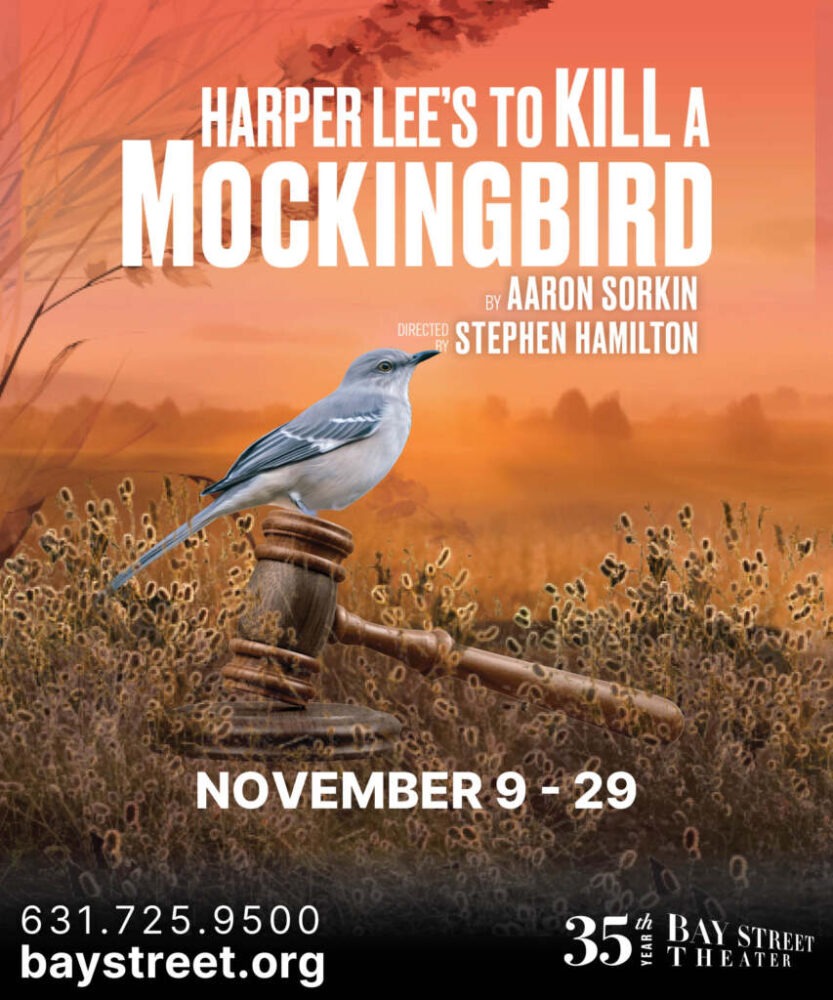
Such is the case with To Kill a Mockingbird, Harper Lee’s Pulitzer Prize-winning novel, reimagined for the stage by acclaimed playwright and screenwriter Aaron Sorkin and brought to electrifying life at Bay Street Theater in Sag Harbor. The production runs thru Nov. 29.
Before a packed, standing-room-only opening-night audience, a dynamic 12-member ensemble delivered a powerful, emotionally charged production that transforms an American classic into an urgent, compelling modern-day drama.
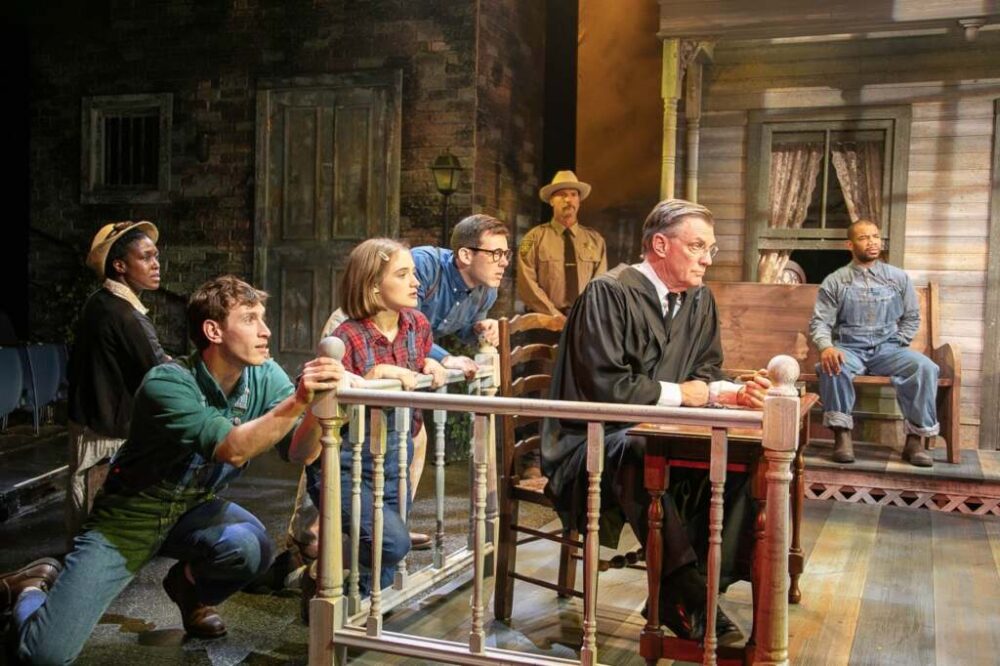
In the caring and capable hands of director Stephen Hamilton, one of Bay Street Theater’s original founders, To Kill a Mockingbird is more than a familiar story revisited. It is a must-see theatrical experience that resonates to the core.
The 90-minute production, performed without intermission, is expertly paced and crackles with emotion and conflict, exposing age-old prejudices through a modern-day lens.
The unseen, all-white male jury may not be swayed to deliver justice, but the audience cannot help but examine questions of conscience, civility and morality, rather than make excuses for violence and prejudice.
Set in the fictional town of Maycomb, Alabama, during the 1930s, the story follows attorney Atticus Finch as he defends Tom Robinson, a Black man falsely accused of raping a white woman. What unfolds is a searing examination of racial prejudice, injustice, moral courage and the uncomfortable distance between what people believe is right and what they are willing to do about it.
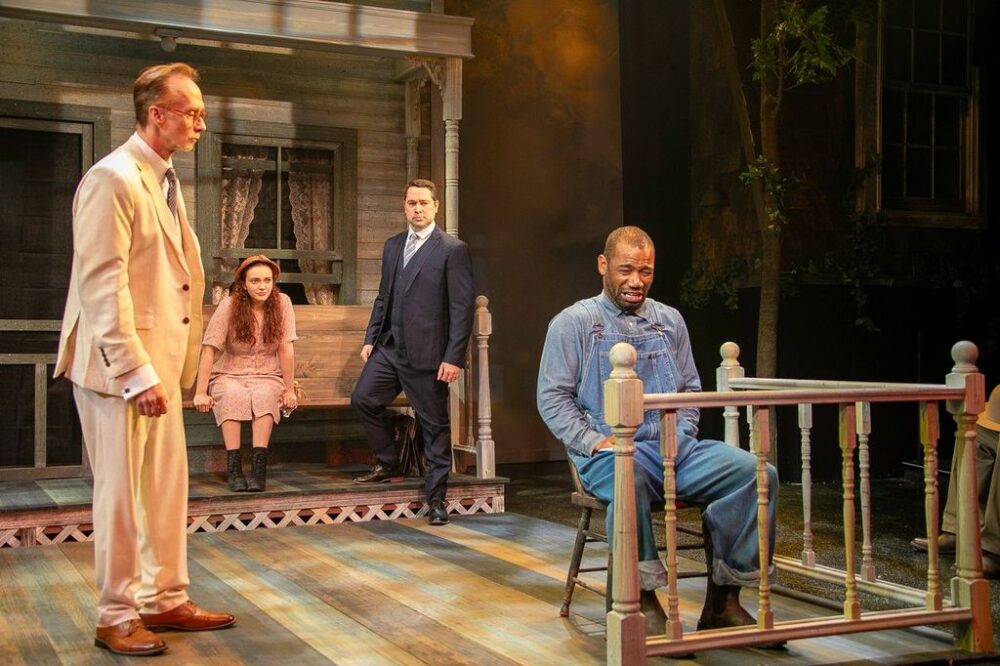
First published in 1960, Lee’s novel became a defining work of American literature. Sorkin’s adaptation, which premiered on Broadway in 2018, approaches the material with a sharper contemporary sensibility, bringing new complexity to familiar characters and placing the courtroom drama at the heart of the story.
Rather than simply retelling events through the eyes of a child, Sorkin gives Scout, Jem and Dill a more active role in examining the adult world, where morality is rarely as straightforward as they have been taught to believe.
Atticus Finch may be an upstanding citizen and eternal optimist with good intentions, but Sorkin exposes the limitations of his worldview. His belief in the fundamental goodness of others is challenged by Calpurnia, his Black housekeeper, and by his own children, who serve as a kind of Greek chorus, narrating and living the drama as it unfolds.
J. Stephen Brantley leads the cast as Atticus Finch, the principled Southern attorney whose faith in the goodness of others is tested by the harsh realities of his community. Brantley brings a steady earnestness and restraint to the role as the conflict intensifies and his client’s life hangs in the balance.
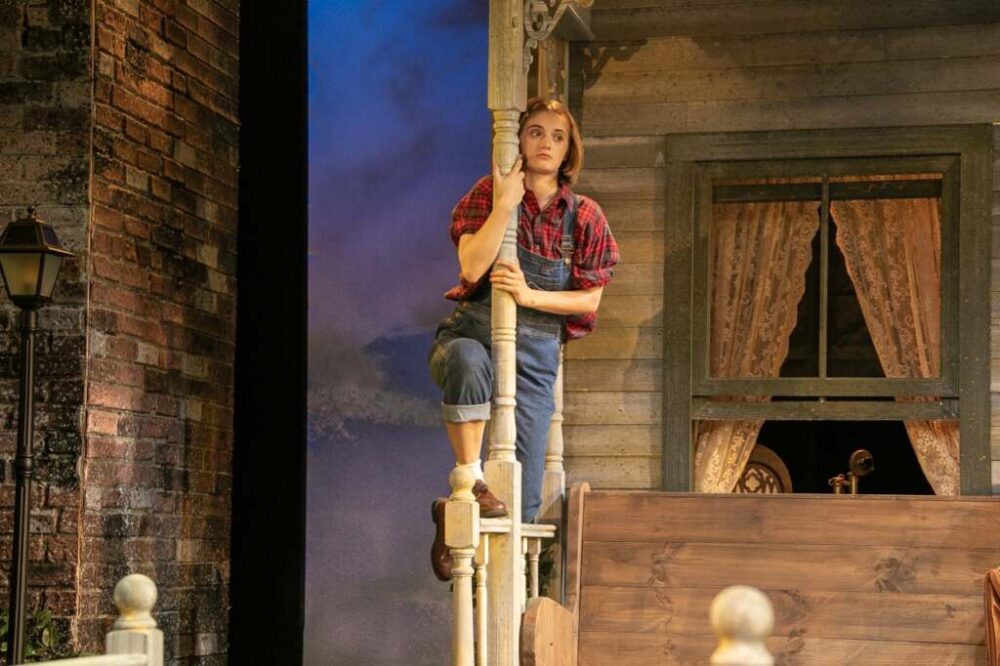
Kendra Foster McBride plays Scout Finch, with Ryan Schaeffer as her brother Jem and Matthew Schiavoni as their friend Dill. Together, the three bring welcome youthful energy to the production, offering a perspective on events that will forever alter their understanding of justice, family and human nature.
They also provide moments of comic relief, with Schiavoni drawing laughs in a play understandably short on humor.
McBride and Schaeffer deliver standout performances, challenging their father while confronting life’s harsh truths. Schaeffer, in particular, is a dynamic emotional force and foil for Atticus. His fiercely loyal character undergoes a remarkable transformation, ultimately demonstrating courage and conviction.
Blake Morris portrays Tom Robinson, whose trial exposes Maycomb’s deeply entrenched racism. Fabre strikes a fine balance among restraint, fear and vulnerability.
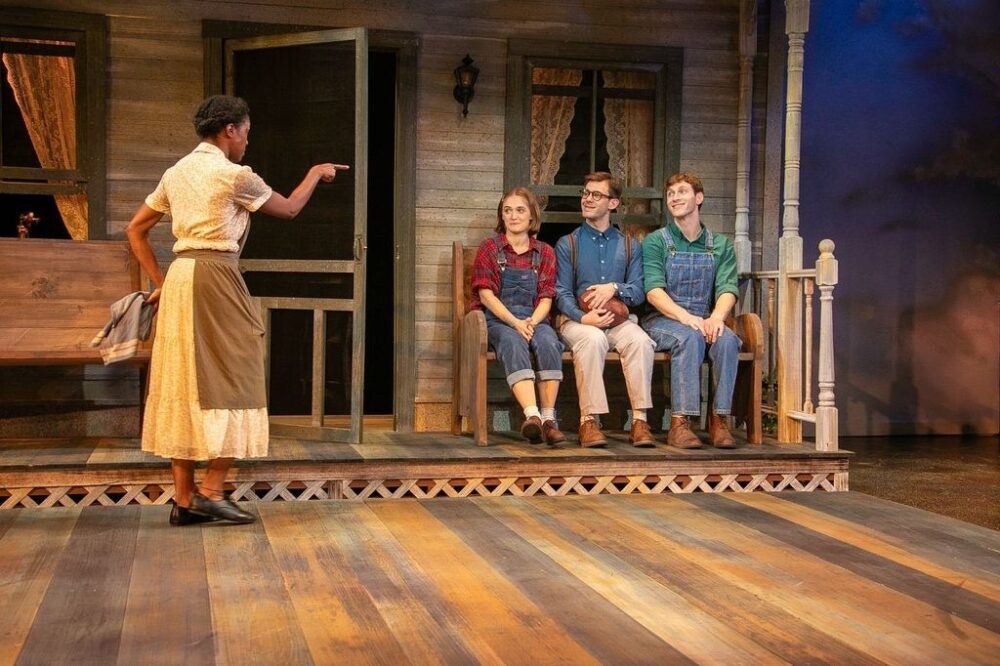
Erin Margaret Pettigrew plays Calpurnia, the Finch family’s housekeeper, whose perspective challenges Atticus’ understanding of the world around him. She provides the fire in the belly that Atticus lacks. Pettigrew’s commanding performance speaks volumes, even in her limited scenes. She is an actor to watch.
The compelling ensemble also includes Hope Hamilton, who delivers a strong performance as the conflicted Mayella Ewell; Mitchell Cetuk, as Bob Ewell, Mayella’s menacing, threatening father; Matthew Conlon as Judge Taylor; Joe Pallister as Sheriff Heck Tate; Michael Santora as Horace Gilmer and Dr. Reynolds; and Kirk Koczanowski in multiple roles, including Boo Radley.
There is a full-circle quality to Hamilton directing this production at Bay Street, the theater he helped establish more than three decades ago and where he served as its first executive director.
The significance of the occasion was underscored by the opening-night audience, which applauded Hamilton at the top when he addressed the crowd, and then stood in unison at the conclusion of the performance for a rousing SRO finish.
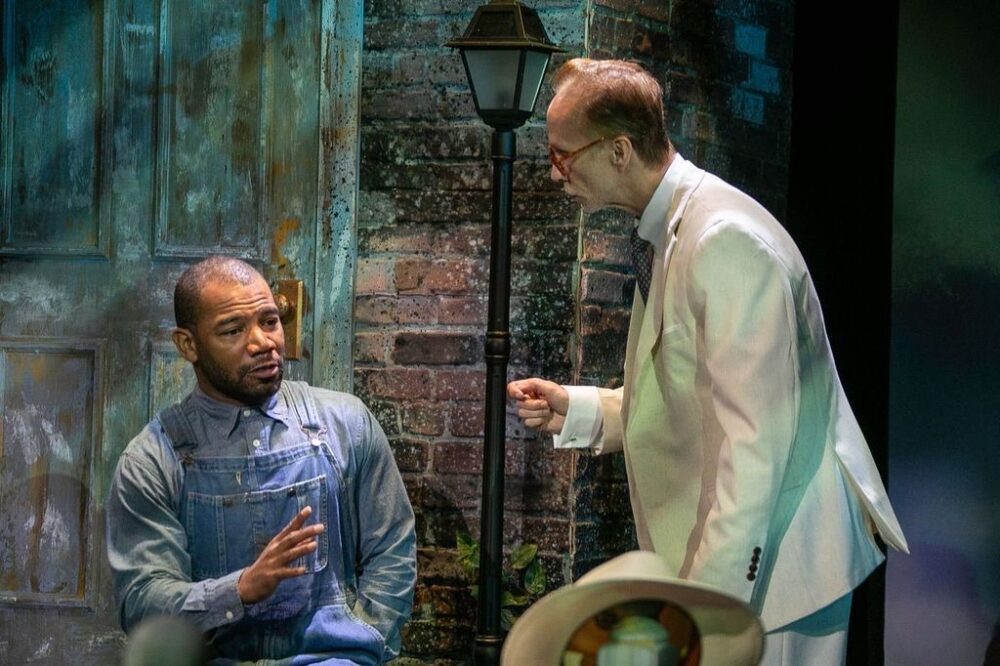
Hamilton, whose recent Bay Street directing credits include Fahrenheit 451 and A Streetcar Named Desire, has a particular affinity for literature that challenges audiences to examine the society around them.
“There has never been a better time in this nation’s history for a re-examination of Harper Lee’s Mockingbird, an essential chapter in the American cultural narrative,” Hamilton said in advance of the production.
“And from Aaron Sorkin’s point of view, the conversation about the nature of evil, and the limits of individual morality is as pressing today — perhaps more so — than they were in 1960.”
Under Hamilton’s direction, the play moves from the breezy innocence of children tossing a football and playing together to the frightening appearance of hooded Ku Klux Klan members threatening violence, setting the stage for a confrontation between courage and hatred.
Perhaps the most striking aspect of this production is how little distance there seems to be between the fictional Maycomb of the 1930s and the America of today.
Questions about racial injustice, the abuse of power, the courage to challenge prevailing attitudes and the consequences of remaining silent are hardly confined to the history books. They remain central to the national conversation.
And that is precisely why this production matters.
Bay Street’s To Kill a Mockingbird does not offer audiences the comfort of believing that the injustices portrayed onstage belong to another era. Instead, it asks them to confront how much has changed — and how much has not.
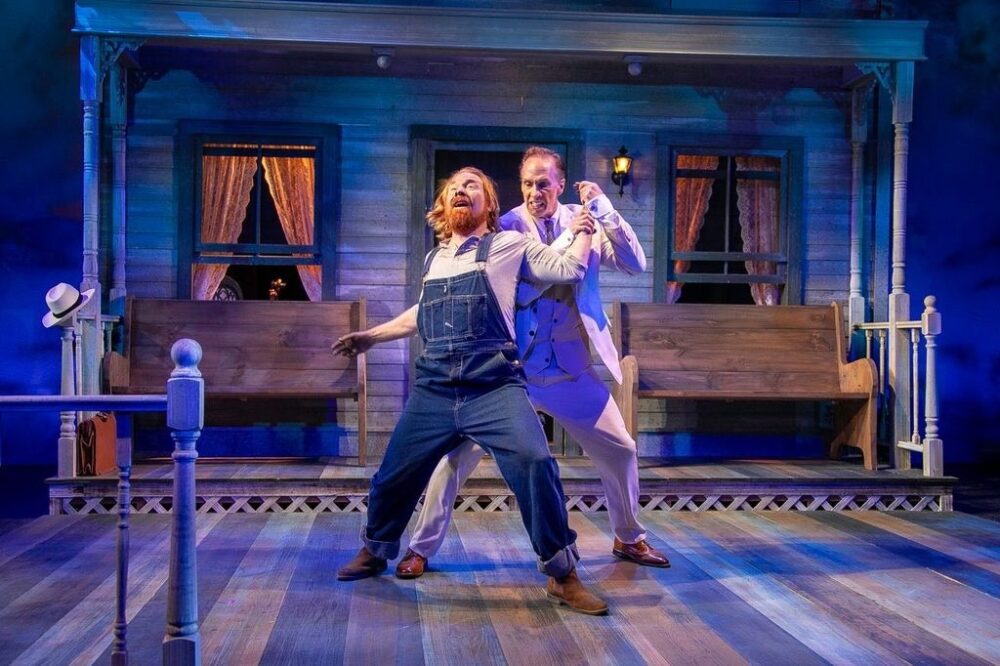
The production is part of Bay Street Theater’s Literature Live! program, which brings professionally staged works of literature to middle and high school students at no charge.
More than 3,000 students from across Long Island are expected to attend performances this November, many experiencing live theater for the first time.
Over the past 18 years, the program has introduced more than 48,000 students to live theater, making this production not only a significant artistic undertaking but an important educational one.
For those students, and for audiences of every generation, To Kill a Mockingbird offers something increasingly valuable: a reason to question, to think and, perhaps most importantly, to talk to one another.
The production’s technical elements — from the set and lighting to the sound, costumes and stage combat — are skillfully executed, enhancing the drama without distracting from the performances.
The creative team includes Mike Billings, set and lighting designer; Yuka Silvera, costume designer; David Brandenburg, sound designer and music director; Eszter Zador, production stage manager; Kat Hansell, assistant stage manager; and Christian Kelly-Sordelet, fight director.
 The Verdict
A must-see production. Dynamic, electrifying and unflinchingly relevant, To Kill a Mockingbird is riveting from start to finish.
It reinforces Bay Street Theater’s stellar theatrical reputation and delivers exactly what audiences who appreciate strong writing, directing and acting hope to experience.
Put it this way: There’s not a moment when you’ll find yourself checking your watch and wondering whether the American Hotel has an empty table or a seat at the bar.
What: Harper Lee’s To Kill a Mockingbird, adapted by Aaron Sorkin and directed by Stephen Hamilton
Where: Bay Street Theater, 1 Bay St., Sag Harbor
When: Through Sunday, Nov. 29, 2026
Tickets: baystreet.org or 631-725-9500
Box office: Wednesday through Saturday, noon to 5 p.m., and 30 minutes before performances.