From Main Street to “Chain Street”? Three local perspectives on proposed restrictions, property rights and… Read More →



From Main Street to “Chain Street”? Three local perspectives on proposed restrictions, property rights and… Read More →

From decorating a holiday tree for the birds to tracking winter wildlife, exploring the Pine… Read More →
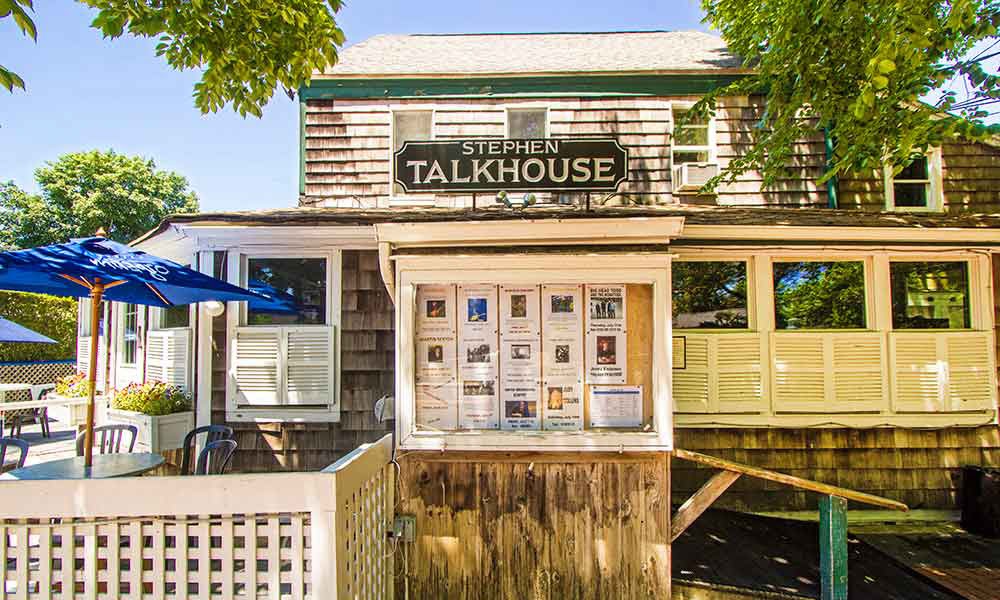
From late-night performances and legendary musical surprises to the artists, bartenders and regulars who made… Read More →

Tony Award-nominated Broadway star Betsy Wolfe brings her powerhouse voice, quick wit and unmistakable stage… Read More →

From candy-covered rooftops to whimsical winter wonderlands, the Children’s Museum of the East End invites… Read More →

Bay Street co-founder Stephen Hamilton returns to direct a powerhouse ensemble in a production that… Read More →

Steps from Radio City Music Hall and the famous Christmas tree, this historic Midtown townhouse… Read More →

The Rockettes return to Radio City Music Hall with a record 230 performances, a high-energy… Read More →

The historic East Hampton Village retreat, owned by Antonella Bertello, earns another international honor for… Read More →

The Hamptons’ summer playground of sprawling estates, poolside parties and Manhattan money provides the backdrop… Read More →
By Angela LaGreca and Ty Wenzel | Spark Hamptons
Walking down Main Street in Sag Harbor just feels good. Maybe it’s the salty air drifting in from the harbor, the historic storefronts and weathered buildings, or the sense that this former whaling village still belongs, stubbornly, to itself.
In Sag Harbor, the operative word is still “charm.” You can wander into a shop without knowing what’s inside, spot a familiar face behind the counter and stumble upon something you never knew you wanted.
But change is coming to Main Street, and not everyone agrees on what that means for Sag Harbor’s future.
The arrival of national retailers including Steve Madden, Rag & Bone and Madewell has fueled a debate over commercial rents, seasonal storefront closures and whether the village should restrict chain stores to preserve its historic character.
Now, with village officials considering legislation that could restrict new chain stores in the historic shopping district, the controversy has attracted widespread media attention. The popular year-round village saw almost as many news trucks this week as it did when Justin Timberlake was famously pulled over two summers ago and arrested on suspicion of driving while intoxicated.
The debate over the presence of chain stores has drawn media attention well beyond Sag Harbor, exposing a divide between those who believe restrictions are needed to protect independent businesses and commercial property owners who fear losing control over buildings their families have owned for generations.
In original interviews with Spark Hamptons, Sag Harbor Chamber of Commerce President Marilyn Holstein, Sag Harbor Variety Store owner Lisa Field and Bay Street Theater board Vice Chair Keith Green offer three distinct local perspectives on the debate and the challenges facing a village navigating change while seeking to preserve its character.
At an Oct. 29 public meeting, Richard Warren, president of Inter-Science Research Associates, presented findings from a study prepared for the Sag Harbor Village Board of Trustees.
The September 2026 report recommends prohibiting new “formula businesses” — generally defined as establishments with 10 or more locations sharing standardized branding, signage or other characteristics — along Main Street and portions of adjoining streets.
Elsewhere in the business district, “new formula” businesses would face special permit review. Existing stores would be grandfathered in, and certain businesses, including banks, medical offices, pharmacies and grocery stores, would be exempt.
Warren identified 10 existing businesses that would meet the proposed definition, more than half of which opened within the previous two years. Although he acknowledged there was no evidence they had already harmed Sag Harbor, he urged village officials to consider acting before their numbers increased.
“You could always ease up on it later, but if the village fills up the formula stores and the village starts closing down in the way you see in the other communities, you’re going to have a hard time dealing with it,” Warren told trustees at the Oct. 29 meeting.
At a Nov. 10 work session, trustees directed Warren to begin drafting legislation. No restrictions have been adopted.
(Spark Hamptons reached out to Richard Warren, president of Inter-Science Research Associates but did not hear back as of this story publication.)
Save Sag Harbor, a local preservation organization, has launched a petition urging residents not to let Main Street become “Chain Street.”
Separately, the Sag Harbor Partnership has been exploring regulatory approaches and financial strategies that could help independent merchants afford commercial space. Its work is distinct from the Inter-Science study prepared for village officials.
For Marilyn Holstein, president of the Sag Harbor Chamber of Commerce, the debate over chain stores presents a delicate balancing act. The Chamber represents independent merchants and national retailers alike, including businesses that employ local residents and contribute to the village economy.
“We all live here. We love that it’s a historic whaling village and the architecture,” Holstein told Spark Hamptons.
“We want to see the historic character of the village maintained, but the Chamber is here to advocate and support all local stores, whether formula stores or local mom-and-pop businesses,” she said. — Marilyn Holstein, president, Sag Harbor Chamber of Commerce
Holstein pointed to the changing retail landscapes of East Hampton and Southampton villages as examples of what Sag Harbor residents fear could happen to their own downtown.
She commended the village trustees for taking a proactive approach to the growing number of national chains but stopped short of endorsing the proposed restrictions. The Chamber, she emphasized, must advocate for all its members, including national retailers that employ local residents and contribute to the community.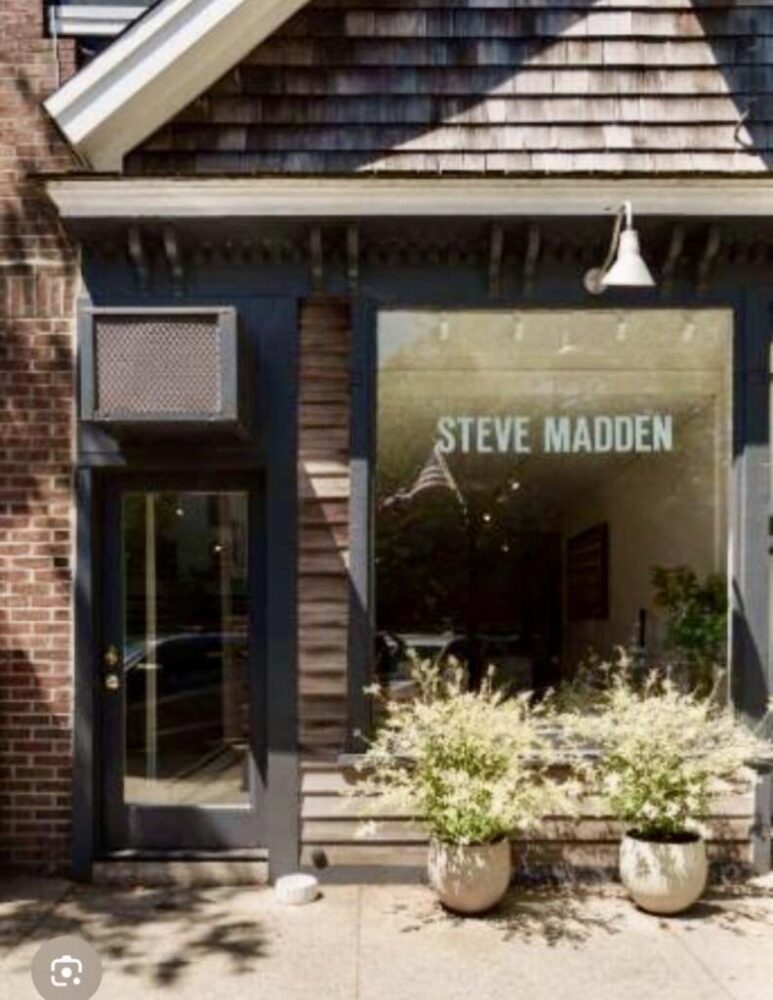
One issue that has galvanized residents is the number of national retailers that close during the offseason, leaving stretches of Main Street looking deserted.
Holstein recalled the reaction when Steve Madden covered its storefront windows in black and posted a message announcing its spring reopening.
“It was the wrong message that we want to convey to visitors coming to Sag Harbor,” she told Spark Hamptons.
“People don’t want to come here and think nothing is going on here.”
In January, the village adopted a law requiring window displays in storefronts that remain vacant for at least a month, including seasonal closures.
Holstein said the Chamber is now working with the Sag Harbor School District to feature artwork by local students, from elementary through high school, in the windows of shuttered businesses.
The initiative would showcase young artists while helping keep Main Street inviting throughout the offseason.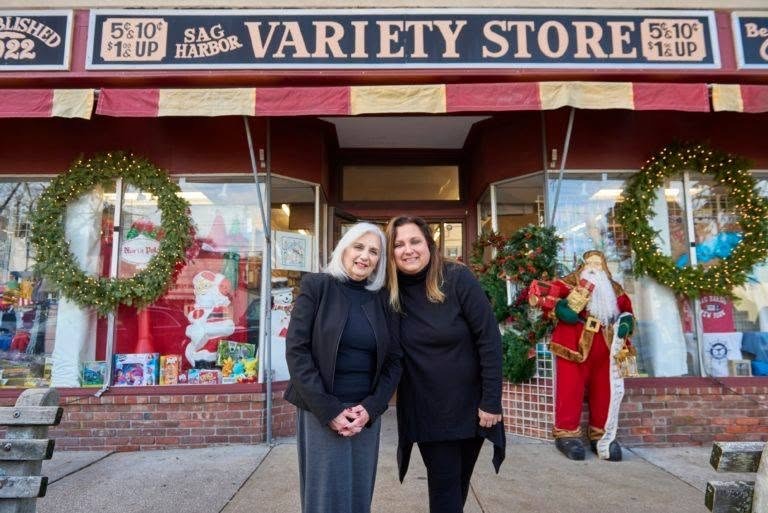
For Lisa Field, the debate isn’t simply about what kinds of stores should occupy Main Street. It’s about who gets to decide what happens to privately owned commercial property.
Field operates the Sag Harbor Variety Store, the longtime Main Street five-and-ten, in a building her family purchased in 1970. She is both a small-business owner and a commercial property owner — a distinction she believes is being lost in the debate.
“The perspective of the landlord, property owner, commercial property owner is being overlooked,” Field told Spark Hamptons.
She agrees that Sag Harbor’s independent shops and distinctive character are worth preserving. But she strongly opposes legislation that could limit her ability to rent or sell the building her family has owned for more than half a century.
At 57, Field has no immediate plans to close the Variety Store. She would love to see her children continue the family business someday, but she believes that should be their decision, not a requirement imposed by the village.
“All of a sudden, you’re devaluing my real estate, taking my options away when I want to retire, either rent out the real estate or sell the real estate.” Lisa Field, Stag Harbor Variety Store
Her family’s investment, she emphasized, was made with the expectation that the property would retain its value and that future generations would have choices.
“It’s a free market. If someone owns something, that is their investment — the investment my family made 50-something years ago.”
Field also questions how officials can talk about making commercial rents more affordable while increasing the costs associated with owning and operating a building.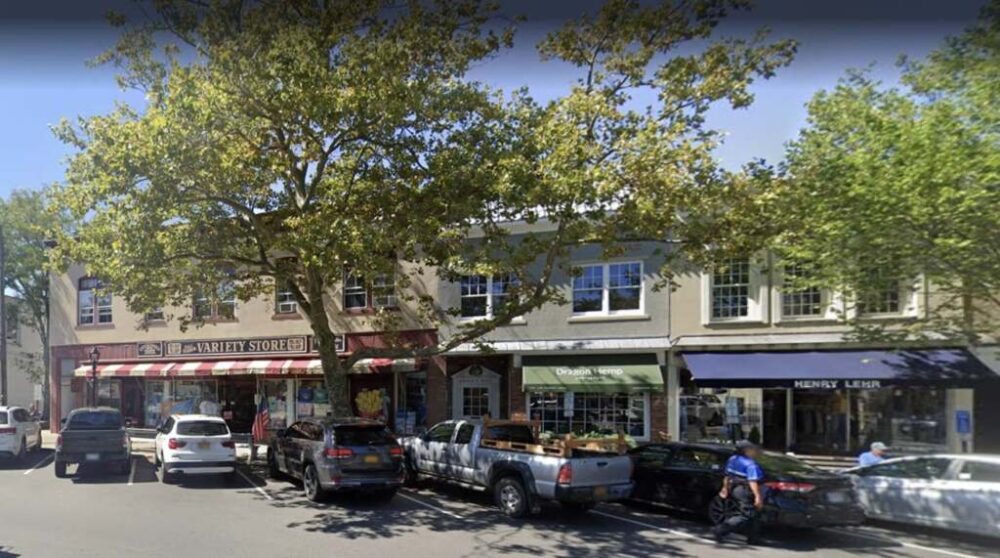
“You’re continually raising taxes, making new regulations. The sewer just went up, and you talk about affordability and how to keep the rents down,” she said.
“The rents are based on expenses commercial owners are paying — taxes and overhead.”
Those expenses, she argues, cannot simply be ignored when discussing what landlords charge tenants. Larger commercial properties also carry substantial insurance, maintenance and operating costs, which can make national retailers attractive prospective tenants.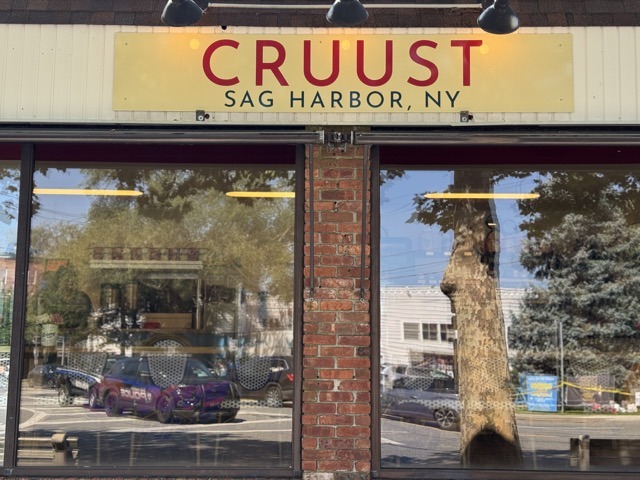
Field said she understands why residents want to protect the village from becoming another luxury shopping district. She also recognizes the good intentions behind the Sag Harbor Partnership’s efforts to preserve independent businesses.
“I do applaud what they are trying to do,” she said. “I appreciate the intention.”
She is particularly receptive to exploring public-private partnerships that might help local merchants remain in the village.
But she draws a firm line at legislation restricting who can occupy a privately owned commercial building.
“When you cross the line to ask the village to turn it into a law, that’s where you lose me.”
Field also challenges the assumption that national retailers are necessarily bad for Sag Harbor’s independent businesses.
“Maybe they are bringing people in season. They come into my store with those bags,” she said, referring to shoppers carrying purchases from Madewell, Steve Madden, Rag & Bone and LoveShackFancy.
The presence of national brands, she suggested, can bring shoppers into the village who also spend money at locally owned businesses.
And while she understands the desire to keep longtime merchants on Main Street, Field believes the most effective way to protect them is straightforward: Shop there.
“How do we protect Sag Harbor Village? Supporting the businesses. If there’s a business in town, you need to support it. People need to shop in these stores.”
She hopes the Variety Store, the Wharf Shop, Fisher’s and other longtime Sag Harbor businesses will still be operating decades from now.
But she also wants to be able to retire when the time comes, without restrictions that could narrow the pool of potential buyers or tenants for her family’s property.
For Field, preserving Sag Harbor’s independence must also mean respecting the rights of the people who own its buildings.
Keith Green, vice chair of Bay Street Theater’s board and a real estate broker with Sotheby’s International Realty, supports stronger restrictions on formula businesses.
“My commitment to Sag Harbor is unwavering because of my love of Bay Street Theater,” he told Spark Hamptons.
Green brings an unusual perspective to the debate: He has firsthand experience in luxury retail, having helped establish an Elie Tahari store in East Hampton for his ex-son-in-law approximately 20 years ago — a venture, he said at the Oct. 29 public meeting, that didn’t turn a profit for the standalone store, but served, rather, as “a 3D billboard” for Tahari.”
He understands why national brands are willing to pay extraordinary rents for prime Hamptons locations, even when the stores themselves may not generate substantial profits.
“Formula stores don’t worry about making money. They are using the store as a billboard, turning our Main Street into a billboard for their global brand,” he told Spark Hamptons.
“They can pay anything. A local merchant can’t.”
For an independent merchant trying to make a living from one or two locations, rent is among the largest operating expenses. Green believes national chains’ ability to pay substantially higher rents puts smaller businesses at a disadvantage when competing for desirable storefronts.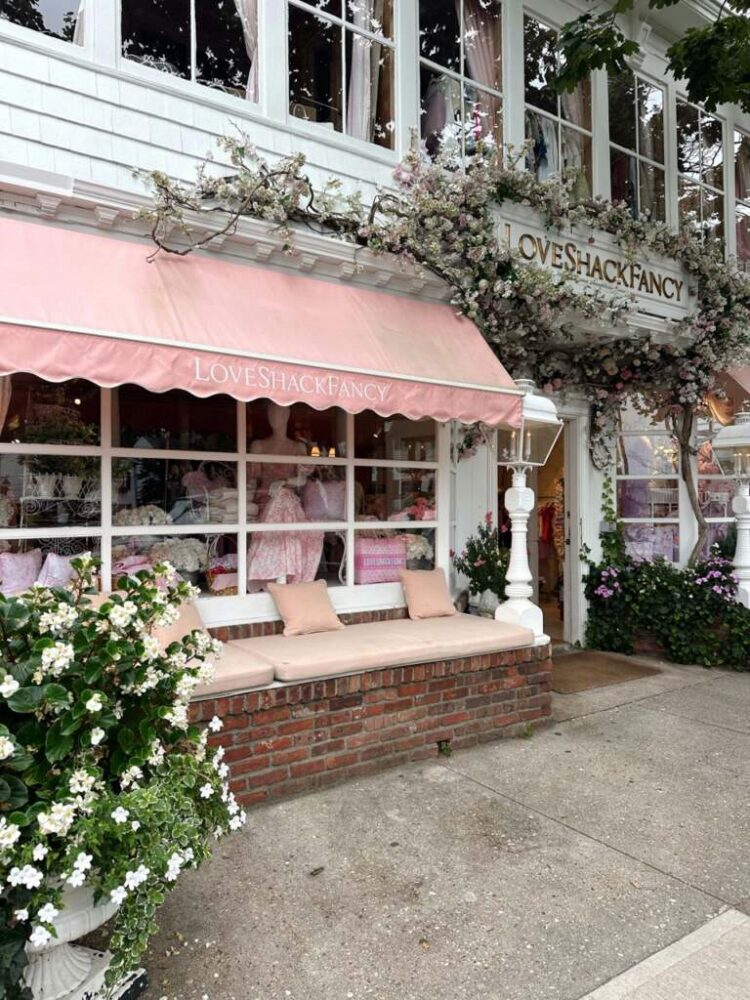
That’s why he believes restrictions should extend beyond Main Street to other parts of Sag Harbor’s commercial district.
At the Oct. 29 public meeting, Green argued that the proposed restrictions didn’t go far enough.
“I said not enough if you don’t also include Bay Street and Long Island Avenue,” Green told Spark Hamptons, recalling his remarks at the meeting.
“We have to make the restricted district as broad and wide as you can possibly make it.”
Otherwise, Green fears, national retailers could simply move into nearby streets, creating the same pressures on independent businesses that the proposed restrictions are intended to address.
“We have to make the restricted district as broad and wide as you can possibly make it.”
Otherwise, Green fears, national retailers could simply concentrate on nearby streets, creating the same atmosphere the proposed restrictions are intended to prevent.
But Green also recognizes the competing interests of commercial property owners, including longtime Sag Harbor families whose buildings may represent their most valuable investments.
“Here’s where the tension lies. Anyone that owns those buildings will get their highest rent from formula stores.”
“The goals and visions and dreams of people that own are often very different than the people that live there.” — Keith Green, vice chair, board of directors, Bay Street Theater
He acknowledges that restricting potential tenants raises difficult questions about property rights and the financial interests of landlords. He does not claim to have an easy answer.
Green believes Sag Harbor needs to do more than decide which businesses it wants to restrict. He wants the community to develop a clear vision for its future.
“Most everybody has a lot of words about what they don’t want,” he said. “I think what we should do is sit down and write a vision plan of what we want our vision to be.”
“Anybody that tells me they want it what it used to be is missing the point.”
“What do we want it to be known for? What is the nature and balance of our community?” he asked.
“Right now, we are at that watershed moment.”
Village trustees are expected to review draft legislation, with further public discussion before any new restrictions could take effect.
The debate raises practical questions about whether zoning restrictions can help sustain small businesses in a market where rents and property values remain high, while also respecting the interests of longtime commercial property owners.
For a village known for its independent spirit, the decisions ahead could have lasting implications for Main Street — and for the people who own, operate and patronize its businesses.
More information:
Village of Sag Harbor — Inter-Science Formula Business Report and Recommendations
Save Sag Harbor — Protect Main Street Petition