From Southampton to Montauk, the East End’s weekend calendar offers live performances, art, film, fall… Read More →



From Southampton to Montauk, the East End’s weekend calendar offers live performances, art, film, fall… Read More →

A couple’s plans to downsize from their longtime Sag Harbor home took an unexpected turn,… Read More →

Peconic Bay Medical Center will provide free breast exams and mammograms for eligible participants, with… Read More →
The Bridgehampton catering favorite brings East End ingredients, farm-fresh turkeys, inventive sides and homemade desserts… Read More →

Rich suede, supple leather, and bohemian rock ’n’ roll details set the tone for the… Read More →

The former social studies teacher and soccer coach posed as a teenage boy on Snapchat… Read More →

Kevin Menard’s Main Street wellness shop is preparing to close by Dec. 11, leaving loyal… Read More →

Forget the basic Hamptons sweatshirt. This autumn, while everyone is here for pumpkin patches and… Read More →

The 11th annual festival, Oct. 21-22, will honor Anthony Anderson, Kate Walsh and Denée Benton,… Read More →

From Benedict Cumberbatch in Frankenstein to The Rocky Horror Picture Show, An American Werewolf in… Read More →
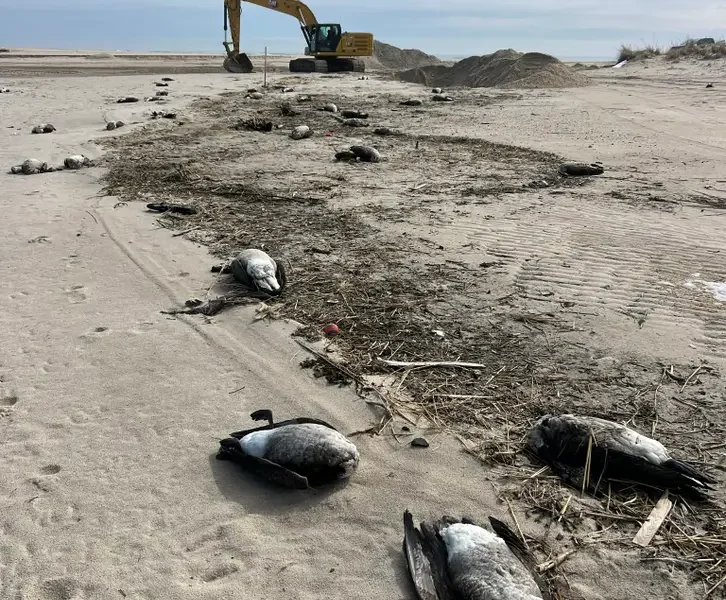
On the East End, where environmental changes first ripple through whispers before becoming spectacle, hundreds of dead geese showed up all at once. What started as scattered sightings grew into 678 carcasses collected around Georgica Pond in East Hampton, with more reports across Long Island.
Testing on geese found in Jamesport pointed to a likely culprit. Early results from New York’s environmental agency suggest infection with Highly Pathogenic Avian Influenza, though confirmation is still pending at a federal lab. It’s a cautious label but signals a virus that has moved through bird populations in waves over recent years, especially in dense winter flocks.
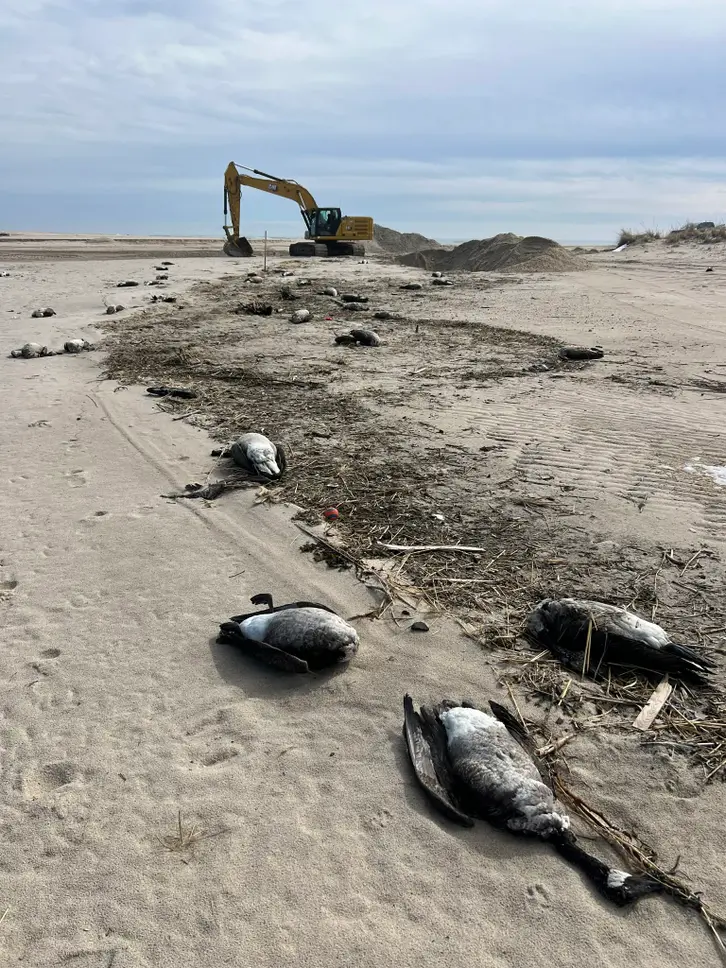
For locals, the crisis felt immediate. Birds that seemed healthy one minute were dead hours later, some falling mid-flight. Others sat dazed along the shores, showing signs of brain damage. The rapid decline, witnessed in real time, made clear this wasn’t isolated but part of a swift, larger outbreak.
The Georgica Pond die-off demanded a response shaped by logistics and environment. Discovered in late February with many dead birds along the shore, jurisdictional limits slowed action. The affected land was trustee-held or private, narrowing who could manage the cleanup.
What followed was a rushed local response—site visits, internal coordination, and guidance based on standardized protocols for outbreaks. As dead waterfowl reports rose across the region—including over 100 in Jamesport along Peconic Bay and more elsewhere in Nassau and Suffolk—state officials focused on the biggest or most telling cases.
With warming weather, decomposing infected carcasses raised new concerns about exposure risks to people and animals. Cleanup moved fast: birds were gathered and buried, some initially on-site, then in secured upland areas. Burials went over three feet deep with heavy sand layers, following state advice.
Public warnings soon appeared around Georgica Pond, urging people to avoid dead or sick birds. Cleanup crews wore protective gear and sterilized equipment after use. Officials later confirmed these practices met established rules, keeping burial sites out of sensitive wetlands.
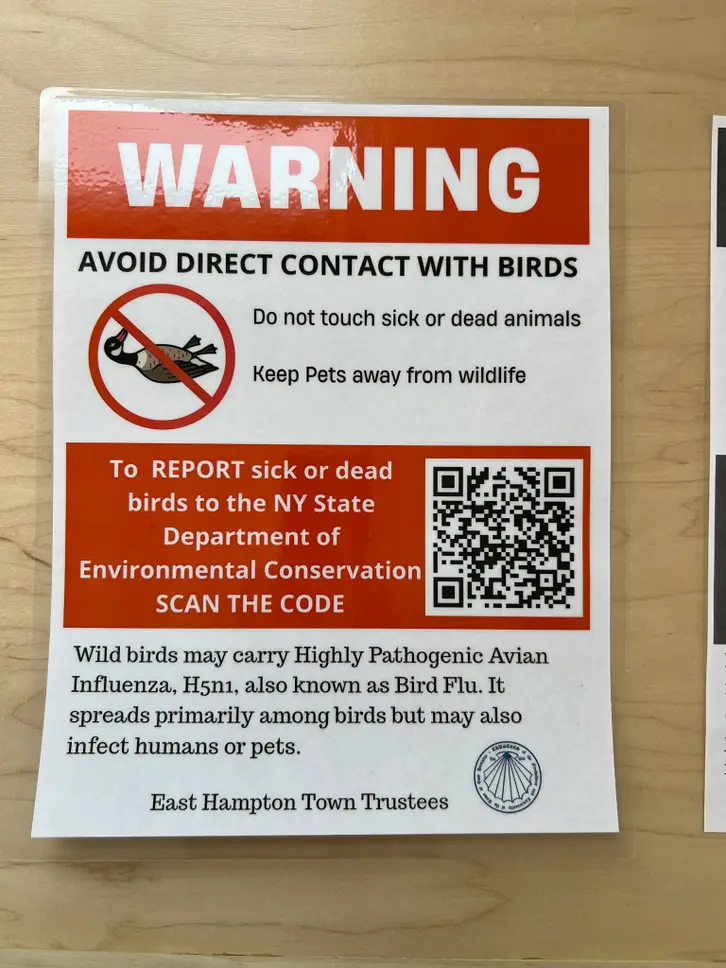
The state’s messages grew more urgent. Large clusters of dead birds are now assumed positive for avian flu, and residents should avoid direct contact. The virus, still active across the U.S. and Canada, spreads mainly through wild waterfowl but has also appeared in hawks, scavengers, domestic poultry, and some mammals. Containment in wild populations isn’t feasible.
Symptoms vary widely in infected wildlife—from breathing troubles to lethargy, seizures, and sudden death. Some birds show no signs before dying. Because of this and the outbreak’s scale, not all dead birds are tested or collected by officials.
People finding dead birds are advised to keep away and keep their pets distant. If removal is needed, wearing gloves, masks, and eye protection is key, avoiding direct touch and sealing remains carefully before disposal. The state continues monitoring through its wildlife health program, partly relying on public reports.
Still, the sight of dead birds remains hard to ignore. Along shorelines and frozen parts of Peconic Bay, residents see clusters of lifeless birds—some ashore, others trapped in ice. Social media has filled in between official updates, fueling uncertainty about causes and cleanup.
This situation reveals a common tension: a visible environmental crisis unfolding day by day, met by a procedural response limited by jurisdiction, resources, and rules. Misinformation easily spreads in that gap, especially about handling carcasses and public health safety.
By mid-March, new cases slowed sharply, suggesting the immediate surge had passed. Seasonal shifts help explain this—winter flocks break up into smaller groups, reducing virus spread and often leading to outbreaks easing off naturally.
What remains is quieter but lasting—a reminder of how quickly ecological disasters emerge in closely watched places like the Hamptons, and how unevenly management systems perform when stretched by scale.
To report any suspected cases of avian influenza, contact the DEC:
By phone, call 631-444-0310.
The East Hampton Town marine patrol is also accepting reports of suspected avian influenza cases on public land. Call the department at 631-537-7575 to make a report.