Wednesday nights in the Hamptons can feel like a toss-up: stay in and keep telling… Read More →



Wednesday nights in the Hamptons can feel like a toss-up: stay in and keep telling… Read More →
Big names, striking work and a major photography auction — five reasons to head into… Read More →

Amanda Seyfried, Alec Baldwin, Nina Dobrev, Trudie Styler and more hit the Hamptons for a… Read More →

Julia Louis-Dreyfus makes her Broadway debut, Billy Crystal gets personal and Aaron Sorkin returns to… Read More →

Greenport’s Oyster Fest, a classic car show in Cutchogue, an Orient art exhibition and vineyard… Read More →

Hollywood stars, Montauk’s chowder contest, Wölffer’s Harvest Party, ARF’s Dog Walk and Judy Carmichael lead… Read More →

Hello, Target. Goodbye, Lidl. As both stores make news on the same Sunday, Giunta’s takeover… Read More →

Bruce Springsteen’s E Street Band guitarist adds nearly $4 million to the asking price of… Read More →

Big premieres, Hollywood heavyweights, filmmaker conversations and a star-studded closing night highlight the Hamptons International… Read More →

A free Hamptons Observatory talk explores how Indigenous cultures in Alaska and Canada have understood… Read More →
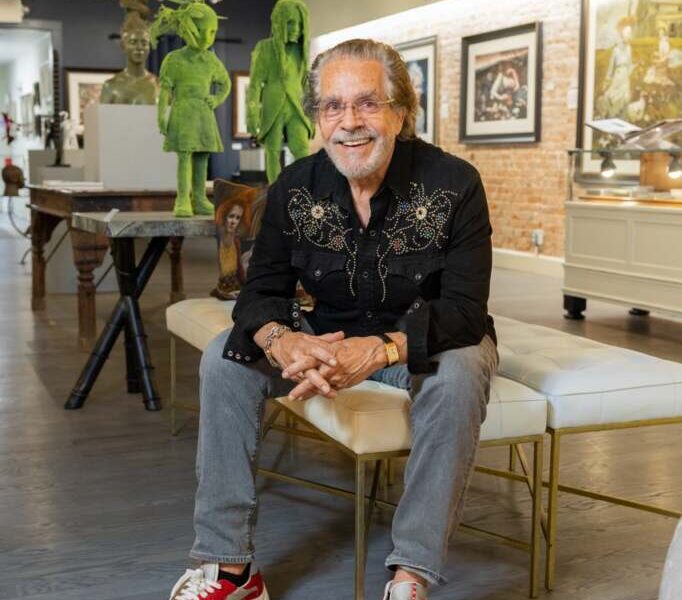
Years after moving RJD Gallery from the Hamptons to Michigan, Demato is still selling art around the world, championing artists he believes in and staying connected to collectors who have long trusted his eye.
There are art lovers, and then there is Richard Demato.
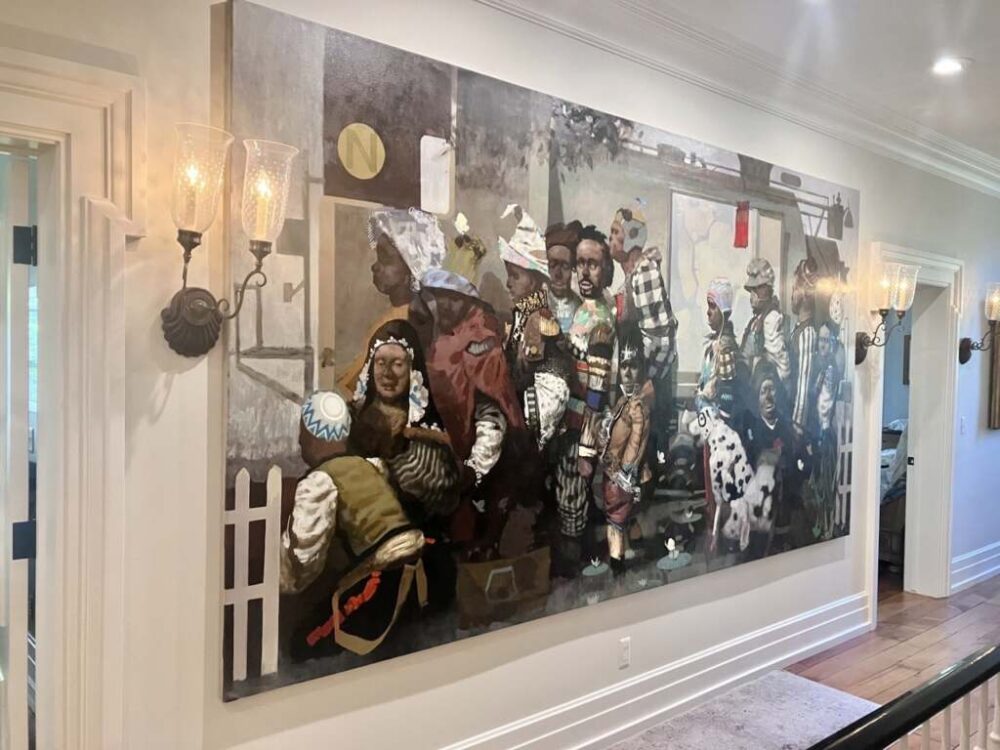
When Demato fell for Phillip Thomas’ monumental “N Train,” a roughly 13-foot-wide painting he first saw at the New York Academy of Art, there was just one problem: It didn’t fit in his house. So what did Demato do? He made it fit, altering doorways in the house to accommodate the painting.
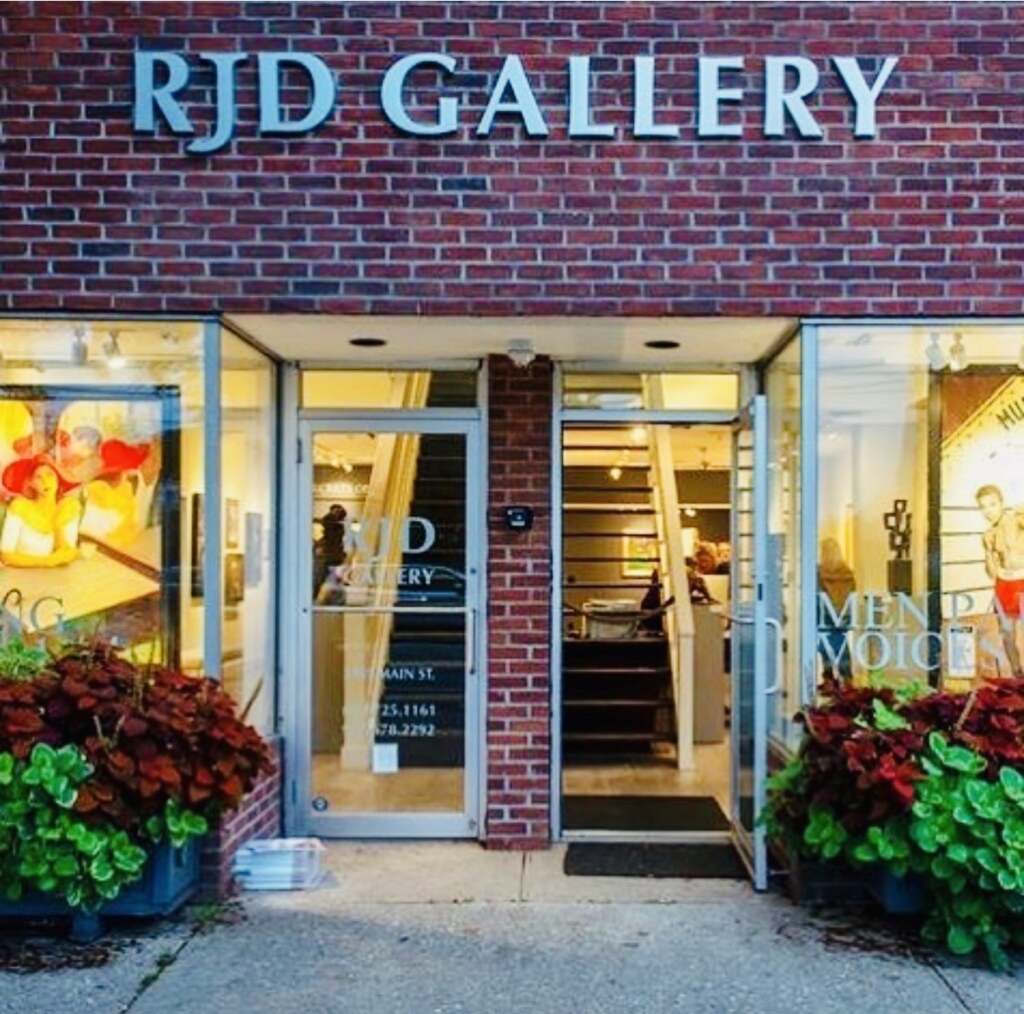
For more than a decade, Demato was a familiar and formidable presence in the Hamptons art world, building RJD Gallery first in Sag Harbor and later on Main Street in Bridgehampton. He cultivated a loyal roster of collectors and some very good friends, some famous, some simply serious about art — while championing emerging artists alongside established names.

Then life took Demato somewhere unexpected.

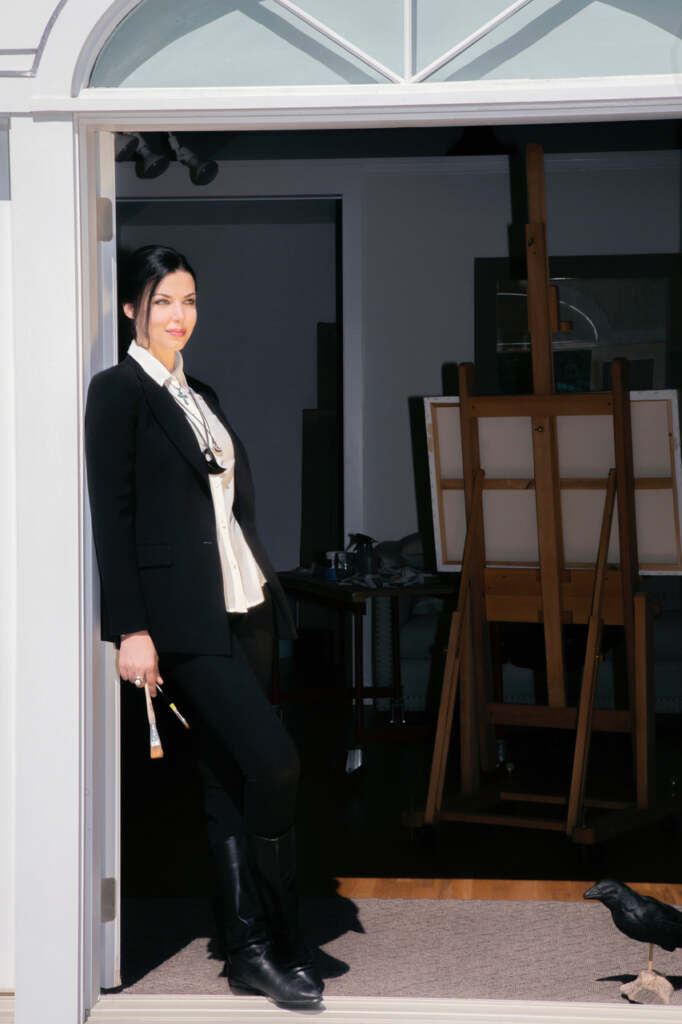
After marrying acclaimed artist Andrea Kowch and having a child together, Demato eventually left the Hamptons for Michigan, Kowch’s home state, moving RJD Gallery with him in 2021. But the move hardly meant starting over.
Today, RJD operates in Romeo, Michigan, sells and ships art around the world — Demato says about 25% of its business goes to Europe — and continues to represent artists whose relationships with the gallery stretch back to its early 2010 Hamptons years.
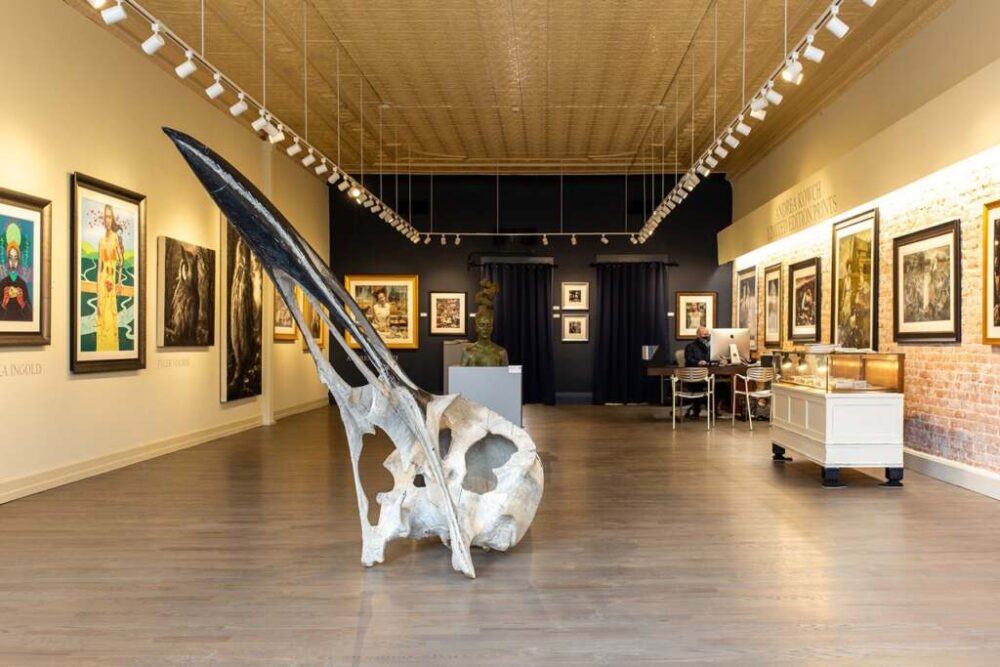
Many of his longtime Hamptons collectors came along, too.
“Yes, many of them have continued to contact us for advice to purchase art, several of them came to our wedding in Michigan, and we stay in touch and discuss our personal lives fairly regularly,” Demato says. “Our clients quickly grew to understand they could trust us, and we could trust them”
And the art itself is distinctive.
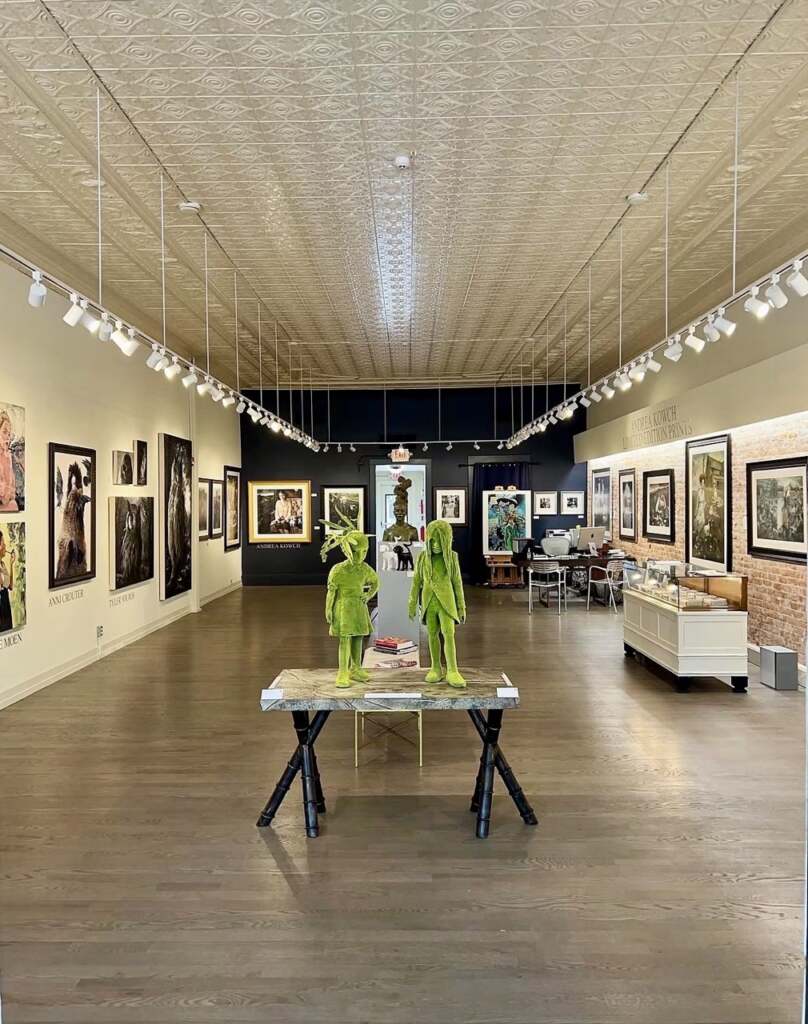
RJD has carved out a particular niche in contemporary representational art, with an emphasis on magical and figurative realism, narrative portraiture and surrealism.
“We focus on art that has a strong, and often ambiguous narrative, offering different meanings to different viewers,” Demato says. “The work must be very detailed or exceptionally well executed to catch our attention.”

His roster reflects that eye. RJD represents artists including Kowch, Jamaican artist Phillip Thomas, Kris Lewis and Tyler Vouros, while its private collection includes work by established names including Jamie Wyeth and Bo Bartlett. Original works by some emerging artists begin at several thousand dollars, while major works by established artists can reach well into six figures.

Get Demato talking about the art and the stories come quickly — about artists he believed in early, works he wishes he’d never sold, paintings he has gone to considerable lengths to get back and others that, even after years in the business, can still move him to tears.
That passion is matched by a sharp understanding of the business of art.
Demato thinks about pricing, scale, scarcity, museum placement and collector demand. He can explain when an artist’s prices should rise, why flooding the market can undermine a career and why a smaller painting can sometimes command more per square inch than a larger one.
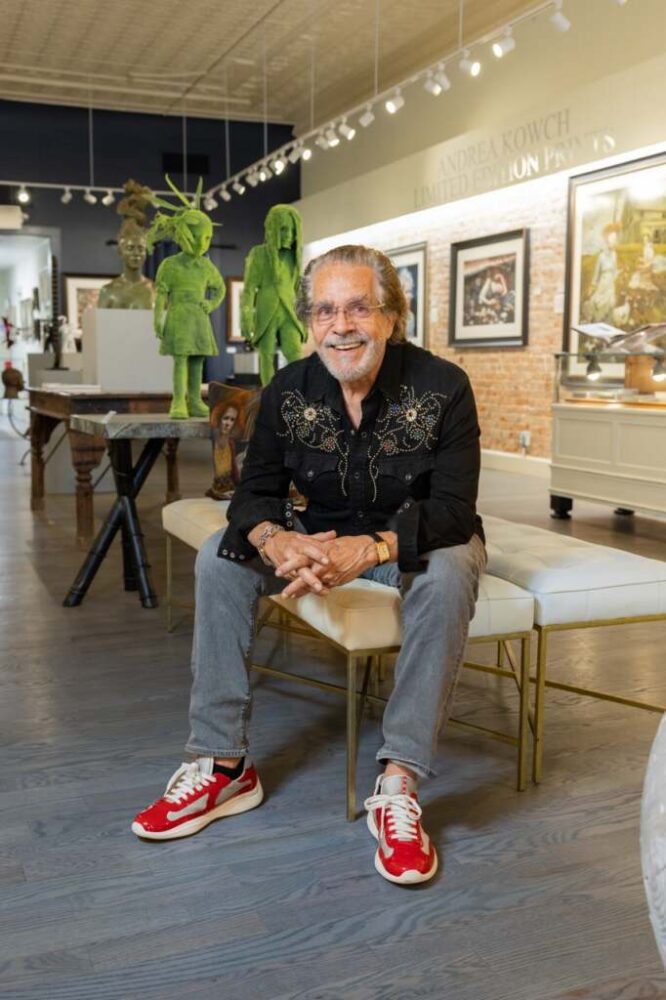
Before opening RJD Gallery, Demato spent some 30 years in the textile and manufacturing business, building a global operation that took him around the world and gave him the opportunity to collect art along the way. The work itself required an eye: finding and developing new fabrics, prints and designs that could catch the attention of designers and major retailers.
He left the business in 2002 and moved to Sag Harbor, where his attention soon turned to a more personal hand in his philanthropy. A neighbor, Sandy Morrell, introduced him to The Retreat, the East End nonprofit serving victims of domestic abuse.
Morrell and the board soon invited Demato to join The Retreat’s board, beginning a relationship that would last about 14 years, including eight years as president.
Art soon became part of that philanthropic work. East End artists including Eric Fischl, April Gornik and Dan Rizzie donated work to help raise money for The Retreat, while others opened their homes for fundraising events.
“We originally started RJD to cultivate donors and raise funds through selling art to support these vital nonprofit efforts,” Demato says.
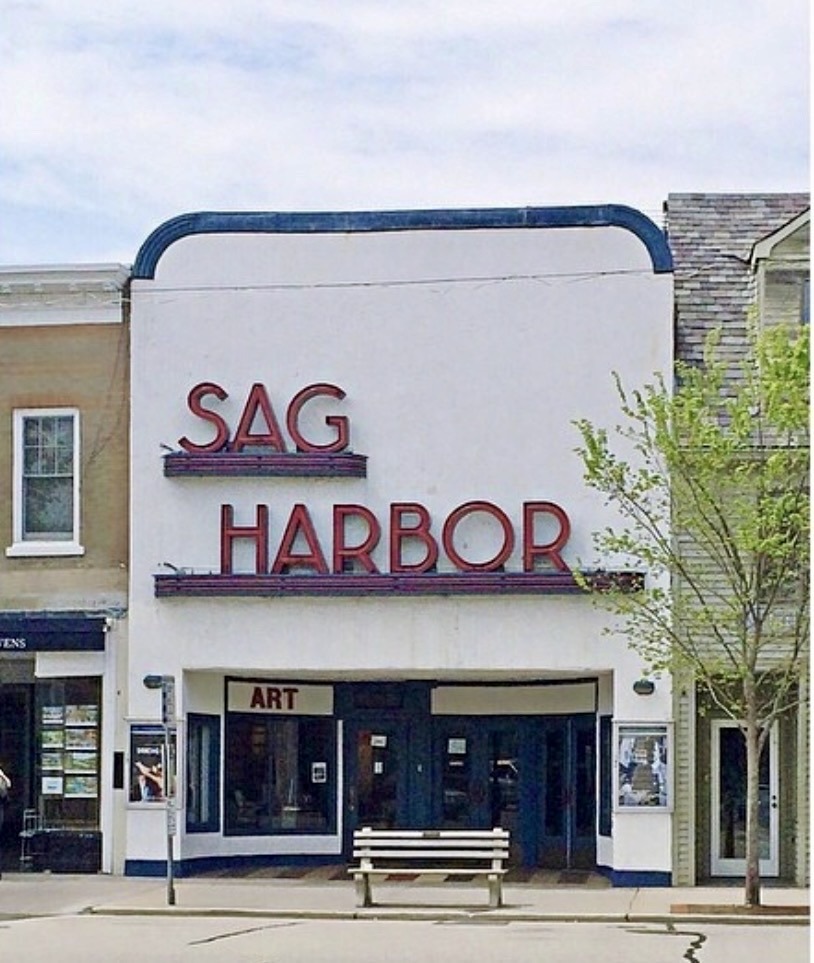
In 2009, Demato began putting together plans for a gallery and took a space at the Sag Harbor movie theater. RJD Gallery opened at the end of that year.
Fischl and Gornik also helped expand Demato’s art world, introducing him to the New York Academy of Art. There he encountered artists including Thomas and Vouros, beginning relationships that would continue for years, and still do today.
In December 2016, a fire destroyed the Sag Harbor gallery.

Demato regrouped and moved RJD to Bridgehampton, where it remained until his move to Michigan in 2021. For many Hamptons readers, that’s the Richard Demato they remember.
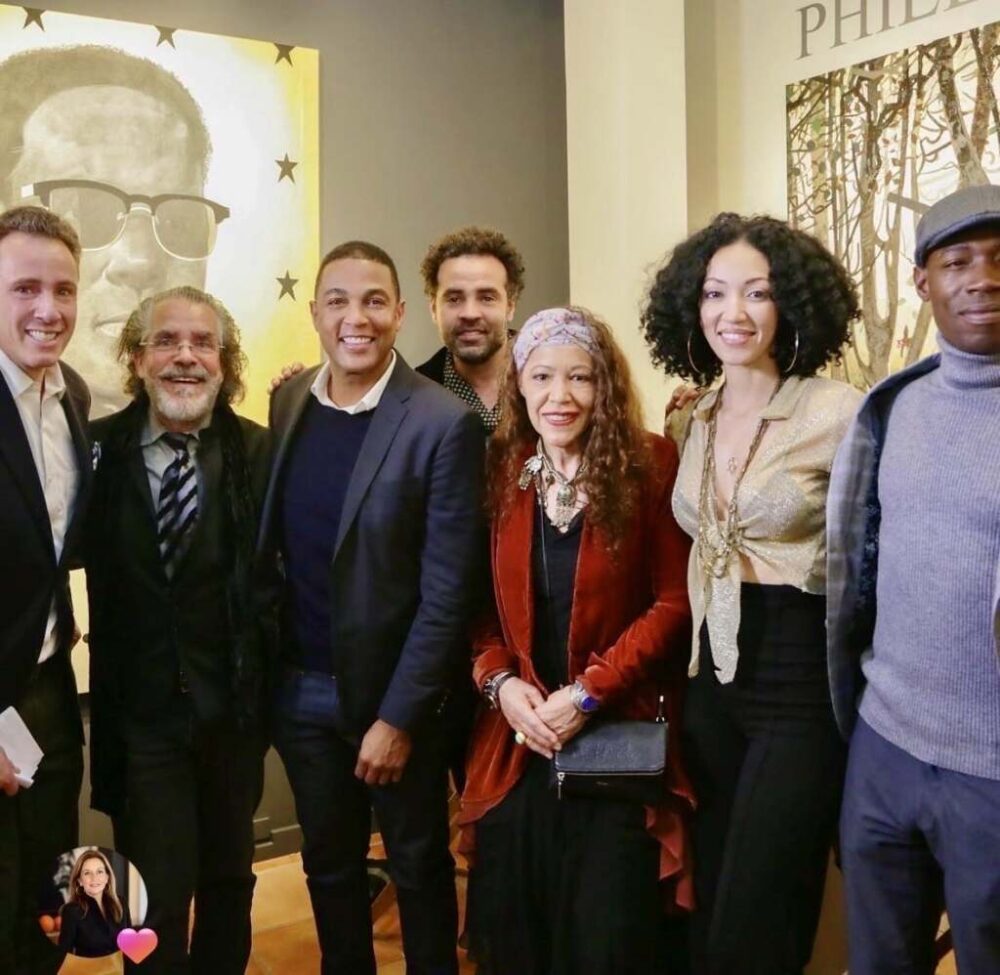
Years later and hundreds of miles away, RJD Gallery remains connected to many of the artists and collectors Demato came to know Out East.
For Demato, representing an artist involves considerably more than hanging paintings and waiting for someone to buy them.
RJD receives five to eight artist submissions a week, he says, but technical ability alone is not enough. The gallery looks for originality, execution, narrative and work that can sustain a collector’s interest.
“Every artist we offer is someone our whole team reviews together to decide whether to move forward,” Demato says.
Once RJD commits, the relationship can extend well beyond selling paintings. The gallery has given some artists advances so they can concentrate on their work rather than rely on second jobs.
Then there is the business of building a market.
Demato uses established pricing formulas for individual artists rather than setting prices arbitrarily. As demand grows, prices can rise incrementally. Supply matters, too. So does scale.
“The smaller the piece, the wider the audience,” he says.
A collector with a salon-style wall may be looking specifically for an 8-by-8- or 8-by-10-inch work. More people can accommodate it, and more can afford it. That can make the price per square inch higher for a small work than for a substantially larger one.
Kowch provides the most dramatic example of what can happen when demand, supply and an artist’s career converge.
“Andrea is unique,” Demato says. “We’ve been selling her future new artworks sight-unseen based purely on the sizing needs and budget of the art collector for a number of years now.”
Her previous works are already committed, he says, and RJD is currently quoting collectors completion dates from the end of 2027 to the middle to end of 2028 for new work.
Long before Kowch became Demato’s wife, she was an artist whose work stopped him in his tracks.
Demato first discovered her work in late 2009, in the issue of Spectrum #16, “The Best in Contemporary Fantastic Art,” and reached out to her. When her first paintings arrived, his response was emotional.
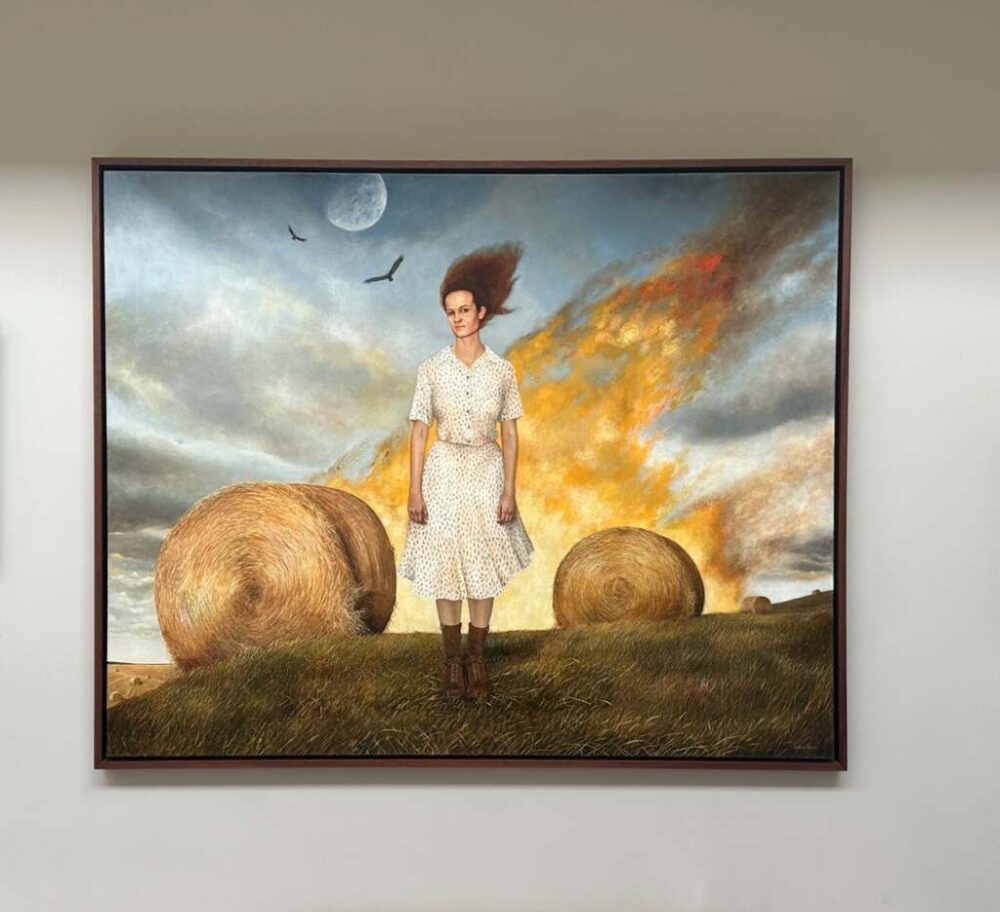
He remembers crying as he looked at them, struck by their sensitivity, detail and the different narratives he could see within them.
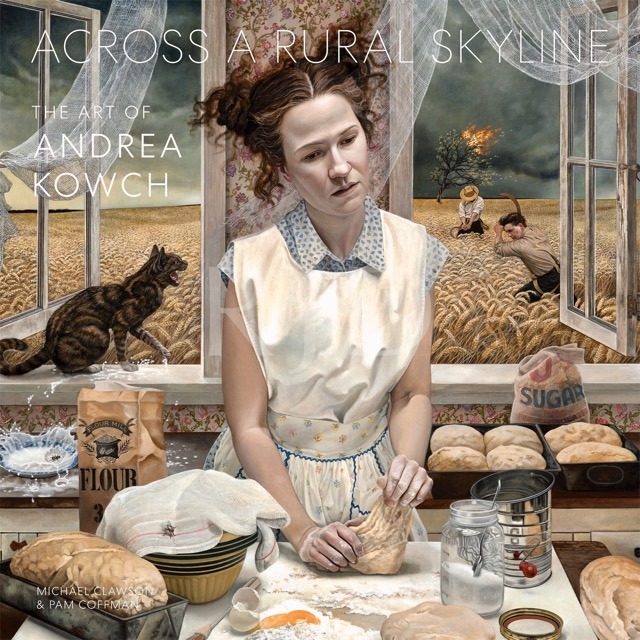
Kowch’s women, animals and windswept rural landscapes reward close looking: A horse in the distance, a butterfly, a fire on the horizon or another seemingly minor element can shift the story.
“The Grand Rapids Art Museum wisely purchased the Andrea Kowch painting “Sojourn” (72 x 60 in. acrylic on canvas) in 2012 after she was named one of the Top Ten Art Prize finalists,” said Demato, adding, “and they would like another.”
His attachment to Kowch’s “Sojourn” became particularly complicated. He bought the painting, later sold it and ultimately wanted it back badly enough to buy it back.

Kowch’s work has been acquired by several museums, including the R.W. Norton Art Gallery Museum, which acquired “The Cape.” In 2024, Kowch won the Musonium Grand Prize Award in the Beautiful Bizarre Art Prize for “In The Distance” (acrylic on canvas, 36 x 36 in.). Her original hand-signed sketches were in several prior museum exhibitions, since 2013, and are now for sale for the very first time.
Today, the business surrounding Kowch’s work is far more structured. Her prices are based partly on size and move upward as her market develops.
Yet Demato’s response to the work remains intensely personal. He describes one Kowch painting that left him crying for more than an hour.
Demato first encountered Thomas’ work at the New York Academy of Art around 2011.
One of the works was “N Train” — the monumental painting that would eventually require Demato to alter his house to accommodate it.
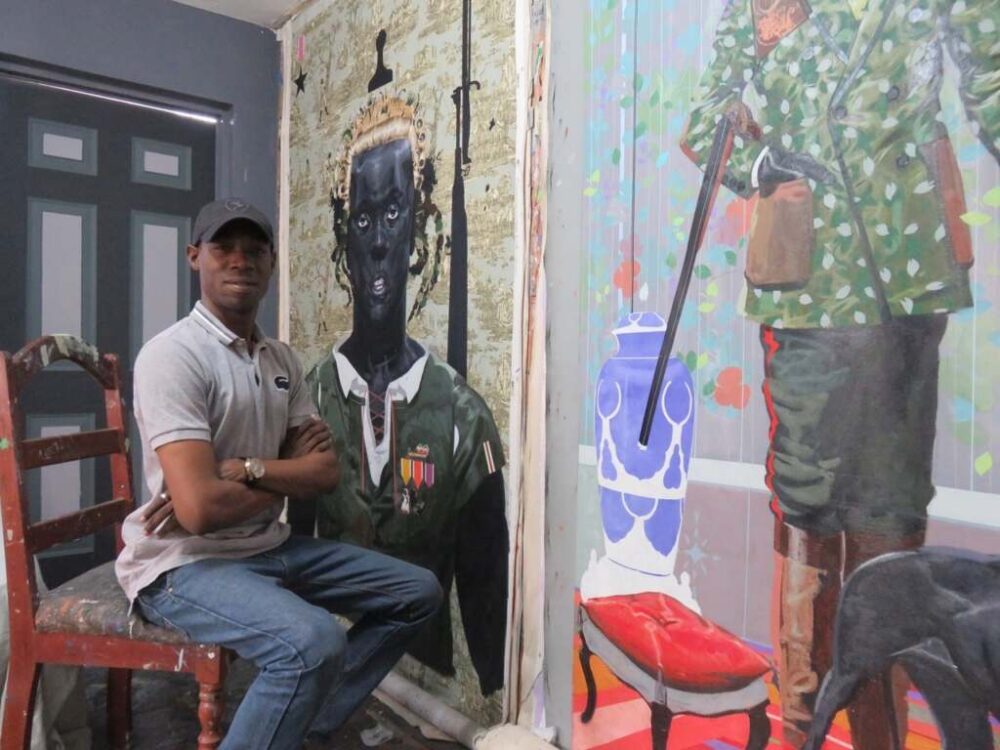
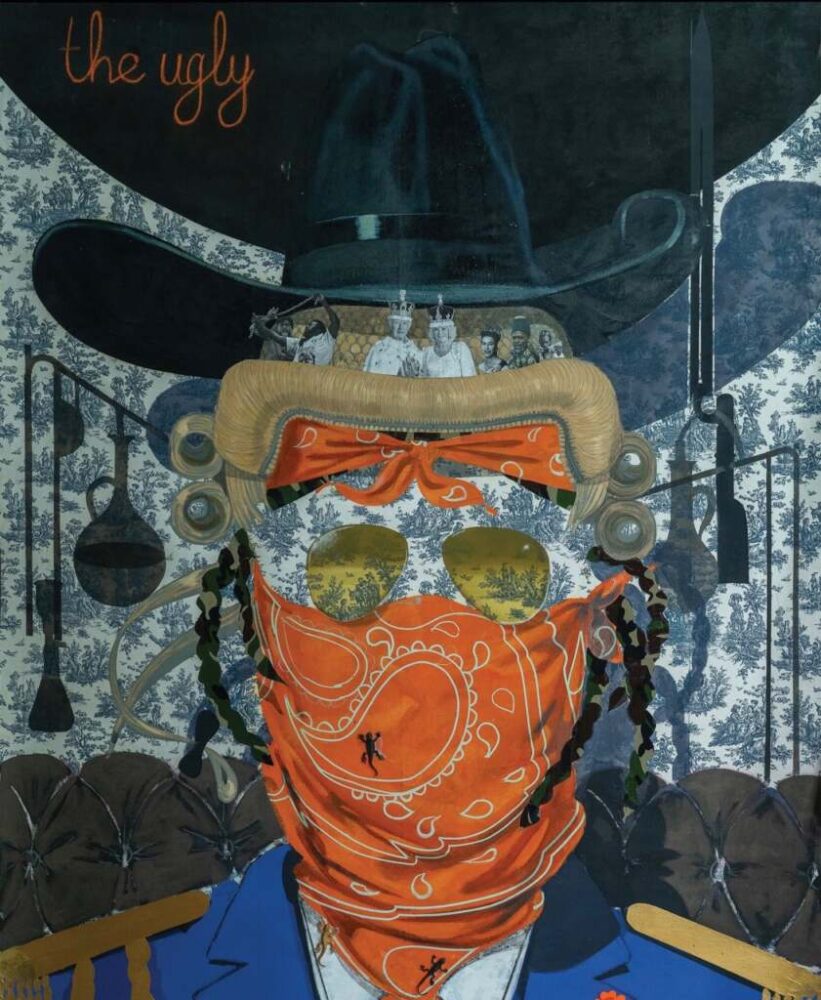
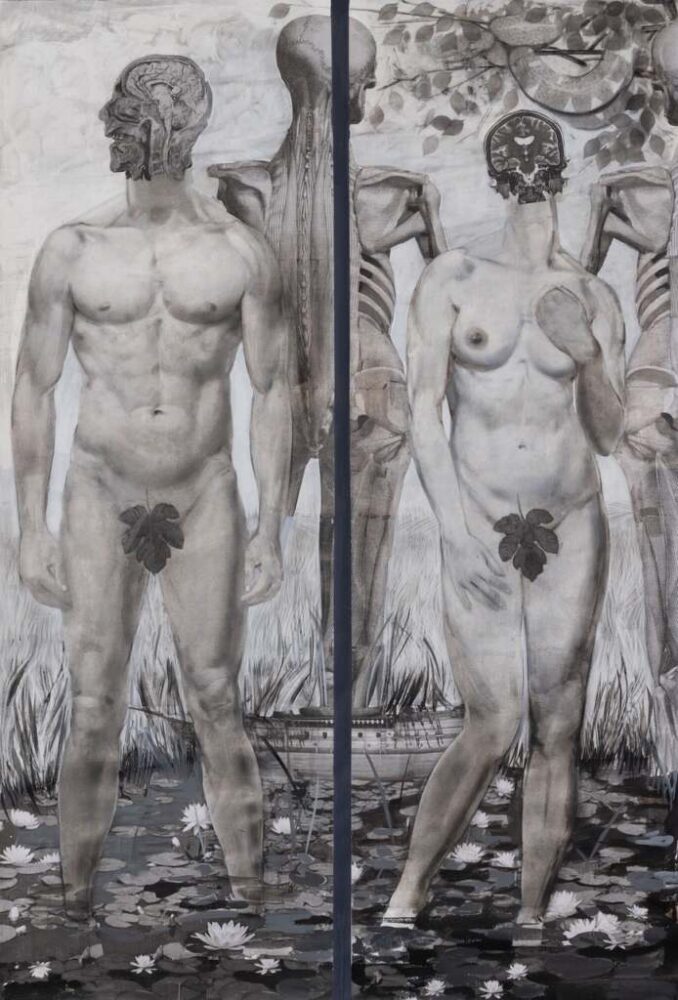
Thomas, a Jamaican artist, brings portraiture together with history, politics, colonial imagery and contemporary culture. His work can incorporate charcoal, stitching and other mixed media.
“His work is unique,” Demato says. “He has a unique perspective. He doesn’t follow trends.”
Thomas has also evolved during his years with RJD, something he has credited the gallery with allowing him to do.
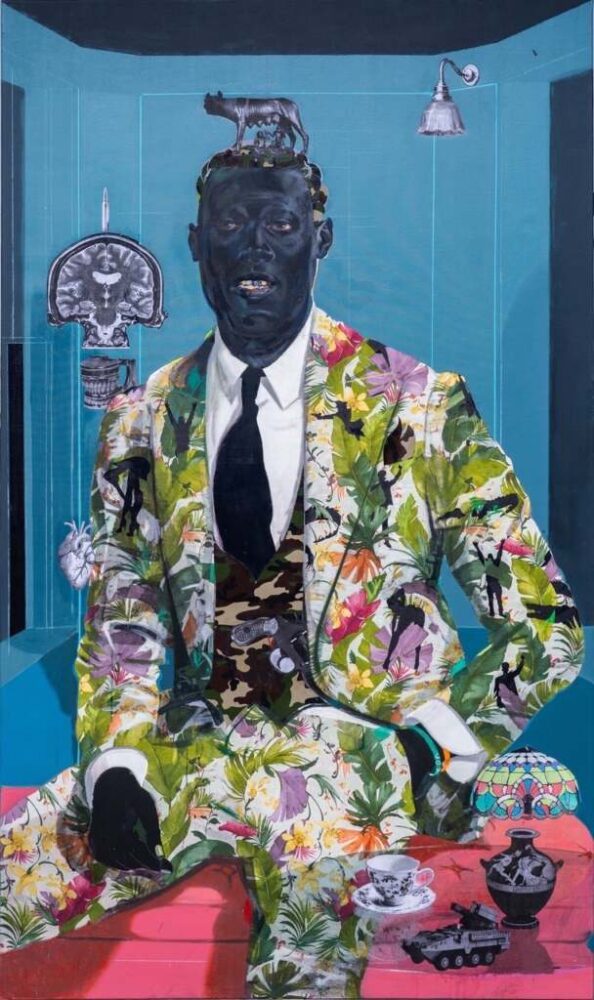
“As an artist goes through their evolution, a gallery must be willing to come along on that journey,” Thomas has said of RJD. “RJD Gallery have done that with great efficiency and to our mutual success.”
With Jamie Wyeth, Demato was a collector before he was a dealer.
“I was building my own collection and fell in love with certain pieces,” he says.
Works by Wyeth remain part of the RJD Private Collection, including a detailed drawing of Arnold Schwarzenegger created during the period associated with “Pumping Iron.” Demato says Wyeth also created custom framing for much of his work.
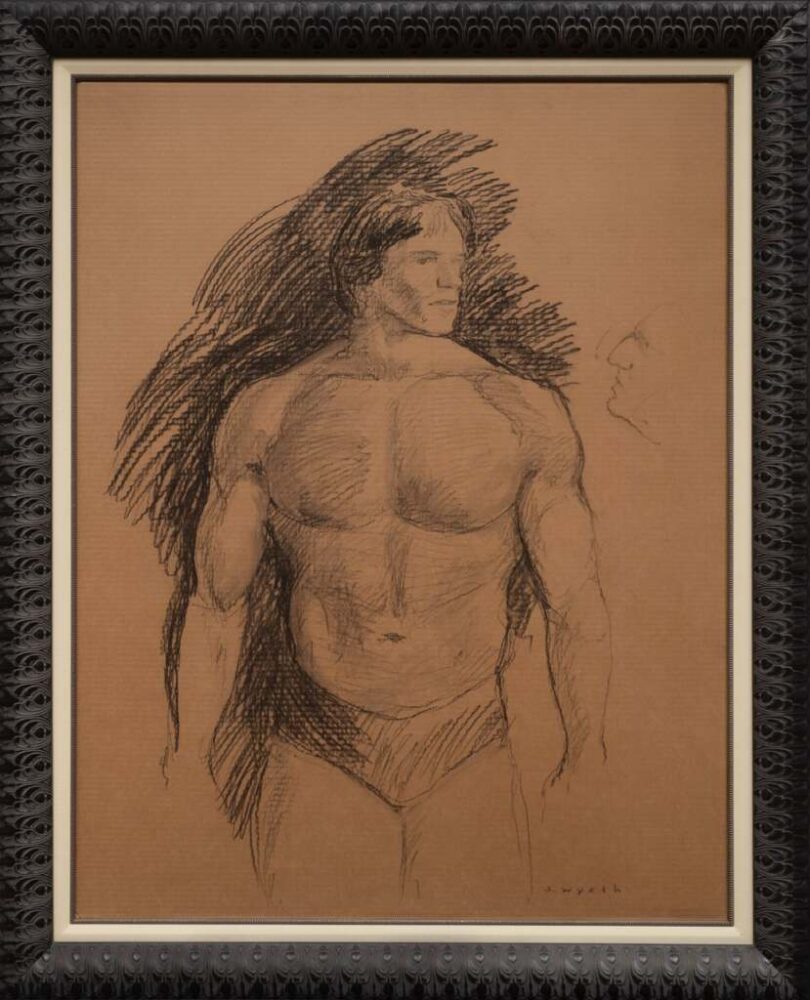
The Schwarzenegger drawing is currently priced at $75,000, according to Demato, while larger original Wyeth paintings in the collection range from $350,000 to $650,000.
But parting with them is not necessarily easy for their owner.

Demato and Kowch have bought works for their own collection simply because they loved them, including pieces that took years for the artist to complete. But Demato is also practical about owning more art than he can display.
There comes a point, he says, when “you can’t hang everything.”
Kris Lewis is one of Kowch’s favorite artists, and Demato shares her enthusiasm.
“He’s really good — a master painter, a consummate oil painter,” Demato says.
What appeals to Demato is not simply Lewis’ technical precision, but the subtlety of the work. His meticulously rendered figures inhabit paintings that can be beautiful, strange and slightly unsettling, often leaving their narratives unresolved.
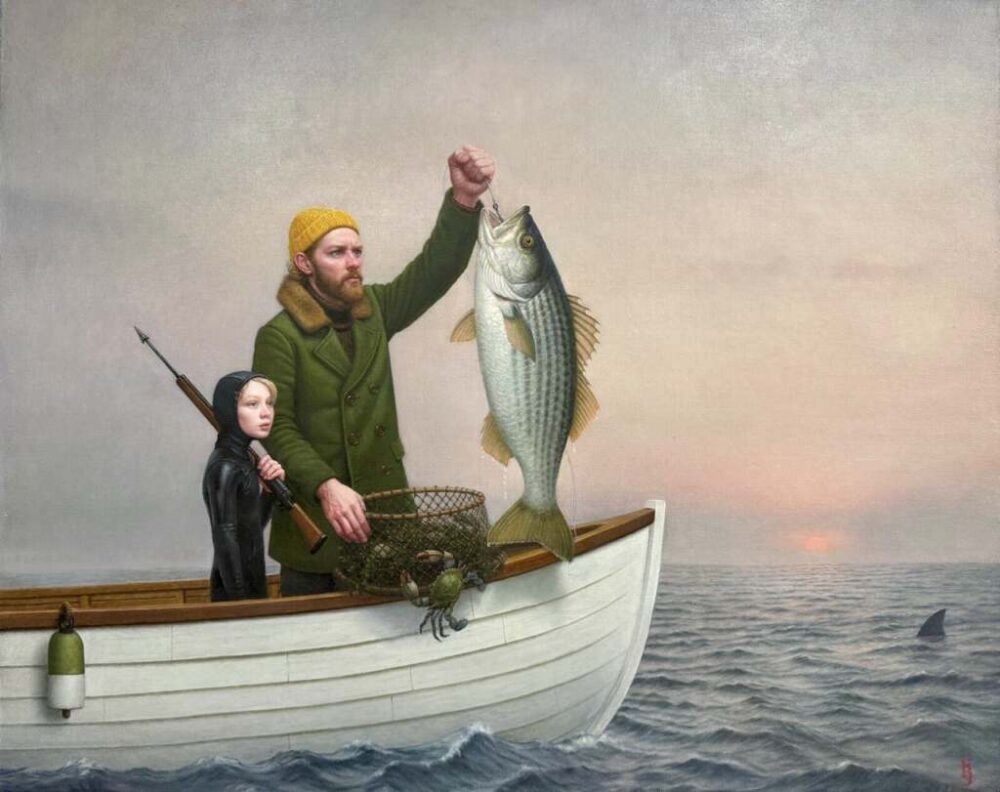
Demato first came across Lewis’ work through Beautiful Bizarre, the contemporary art magazine and platform, and reached out to him. Lewis has since developed a committed collector following.
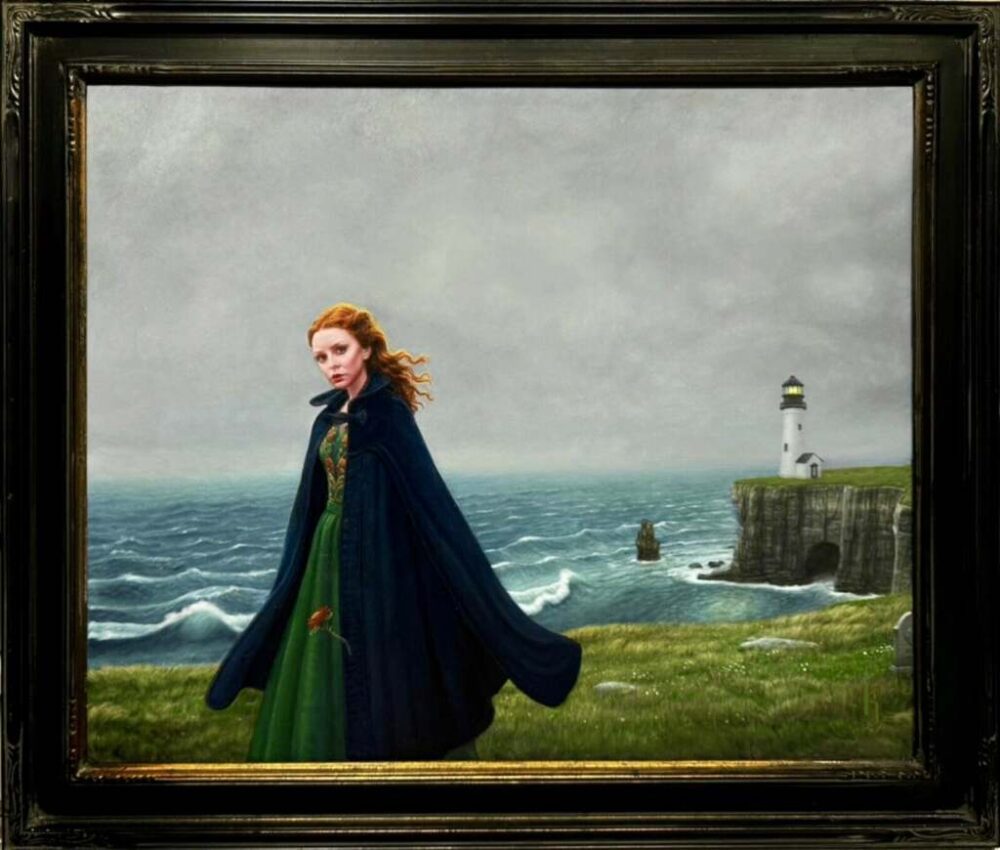
Demato points to one collector in Turkey who waited six months for a Lewis painting — the kind of patience that says something about demand for an artist’s work.
Demato’s relationship with Tyler Vouros stretches back to the New York Academy of Art, where he first encountered his work around 2011.
As Vouros developed his highly detailed paintings of birds and other wildlife, Demato encouraged him to give the landscapes surrounding them greater depth.

“I shared the concept of developing the backgrounds more,” Demato says, pointing to the atmospheric landscapes of the Hudson River School as an influence he suggested Vouros explore.
For Demato, the idea was to make the landscape an integral part of the painting rather than simply a backdrop for the animal — to give the collector, as he puts it, “the whole story.”
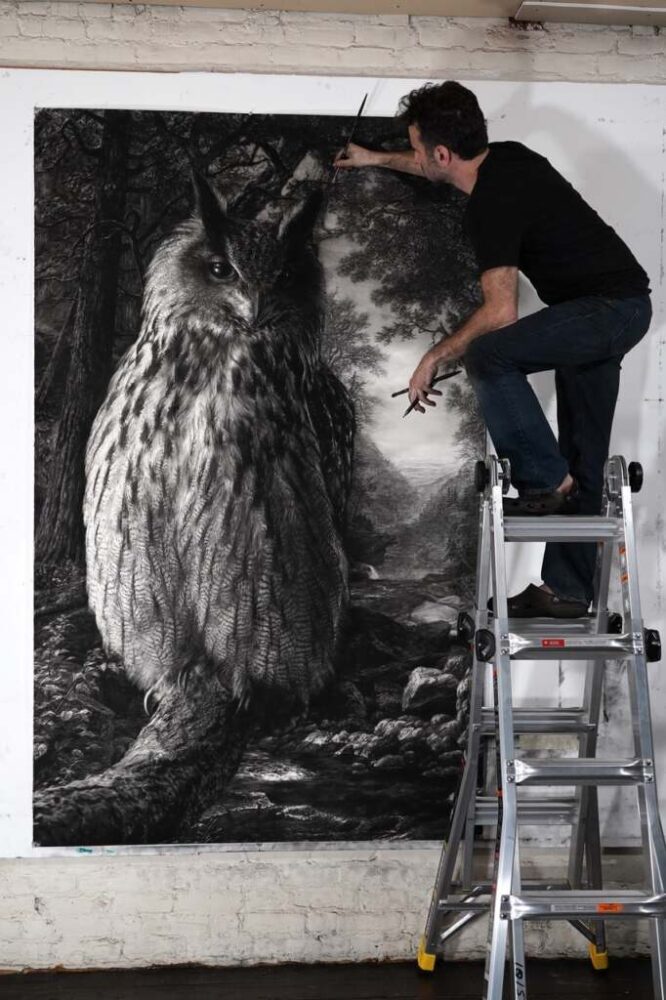
Vouros’ work has continued to evolve, pairing highly detailed animals with increasingly developed landscapes.
We tell all art collectors, new and experienced, to simply always purchase the one you love and are drawn to. You will always have that love, the memory of the purchase and an affinity toward what it says to you.
The most valuable aspect is your own pleasure and long-term appreciation for the work. All art intrigues and interacts with each individual differently. While some art does go up dramatically in value, that is never a guarantee.
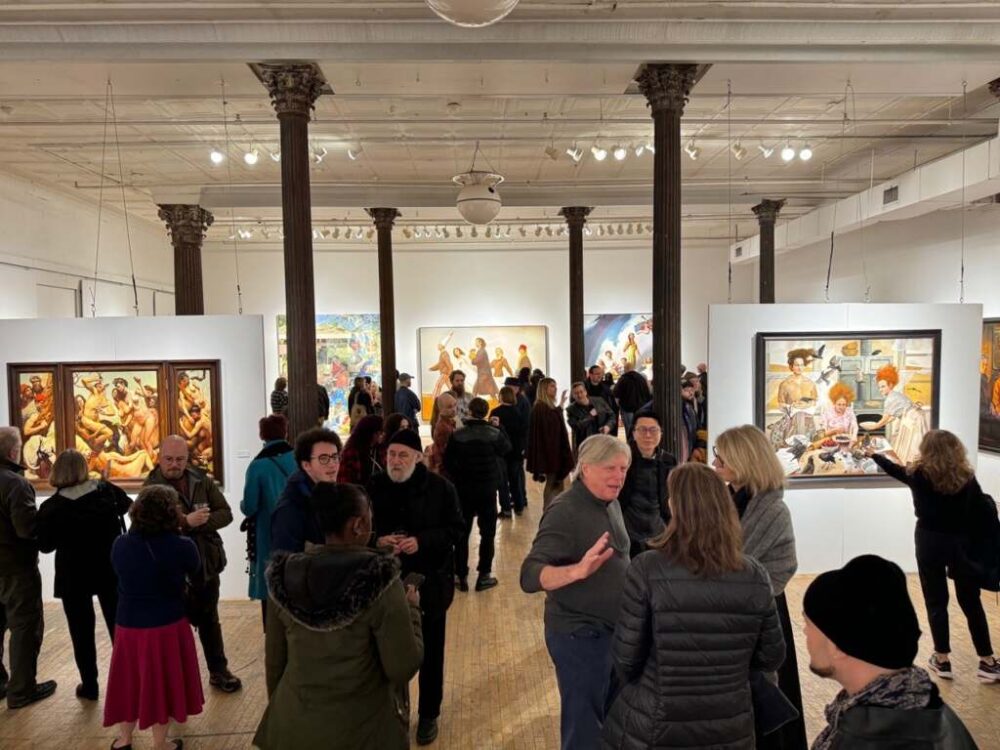
Kris Lewis just won the Grand Prize at the Beautiful Bizarre Art Prize, and his work is really surreal and nuanced. We have so many immensely talented artists. Andrea Kowch comes to mind — we rarely get a chance to even hang her originals because they sell before they’re even off the easel.
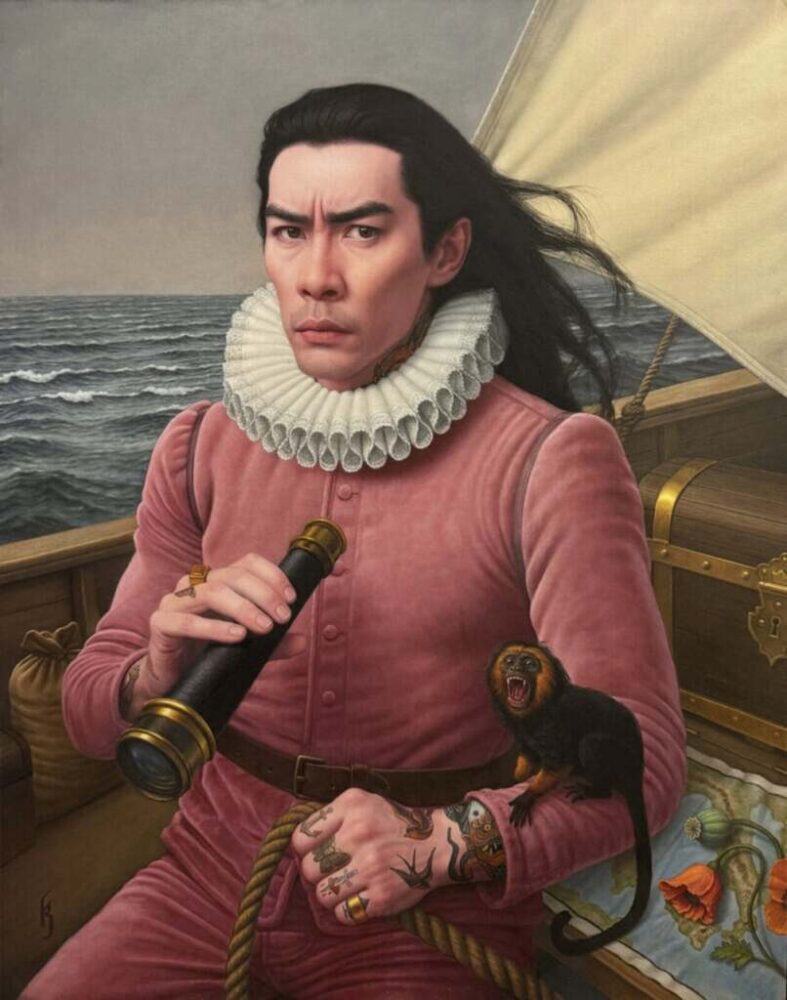
We also have some stunning new larger works from Jamaican artist Phillip Thomas that always resonate strongly with collectors. And from the RJD Private Collection, we have some beautiful, very rare and unique sculptures and, for a very select collector, four original Jamie Wyeth pieces — though honestly, it will be hard for me to give them up.
Often they reach out to learn more or to purchase a specific artist they learned of through our website, social media, advertising or friends.
We have options to fit any budget. We have more ‘emerging’ artists our team all related to whose original artworks range from $1,800 to $5,000, and we offer unframed prints of several of our more popular artists starting at just $650 to $750. We also offer catalogs, books, and puzzles from our artists to our wide range of clientele.
On the other end, we offer names like Jamie Wyeth — whose pieces range from the detailed $75,000 sketch of Arnold Schwarzenegger in the custom frame — up to larger original painted works ranging from $350,000 to $650,000.
Every client has a unique and different personal level of confidence and knowledge of art, and we handle and guide each situation individually.
It’s controversial. Some artists may use AI as a reference. If they need an image of a monkey or a flower and don’t know how to get it, they can go to AI for an image and then paint it. But there’s a gray line there: Was it created originally?
We’ve also had situations where versions of our artists’ work have appeared online and we’ve had to protect the artists, their copyrights and their names, which we always recommend they trademark. That can become costly, but you have to protect your artists.
But our experience and the reality is, the collectors we sell original art to want original art. They want the artist’s work on paper or canvas. The people who buy original art from us are not going to buy AI art.
What do you love most about what you do?
I love working with artists. I feel younger, challenged, encouraged, and more emotionally fulfilled. To be involved with art, especially with a painting, and to see something you never saw before in it — that’s a wonderful thing.
RJD Gallery
227 N. Main St.
Romeo, MI 48065
Tuesday-Saturday, 10 a.m.-5 p.m.
Closed Sunday; Monday by appointment
Phone: 586-281-3613
Website: rjdgallery.com